
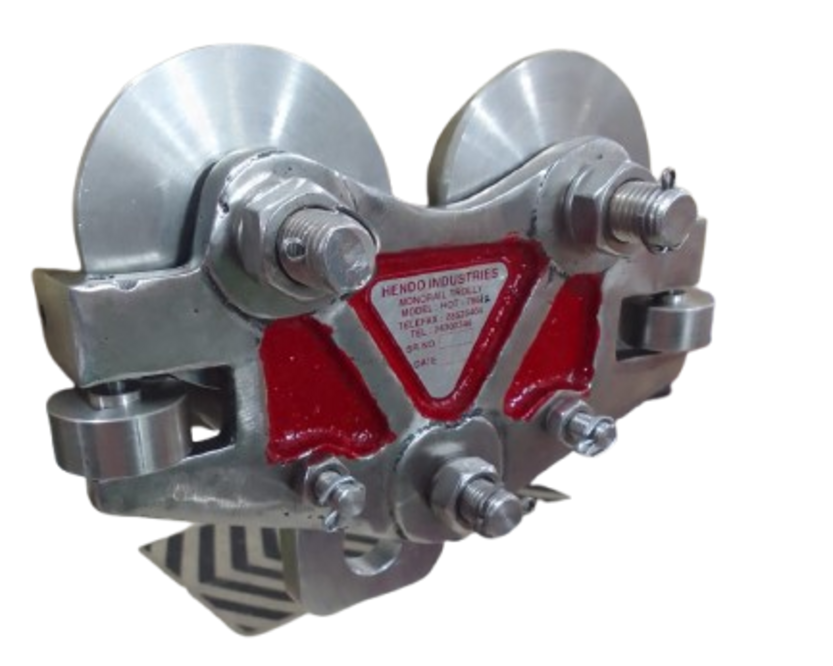
A 2,000 kg label does not tell you whether a trolley suits your load, route, floor, operators, or cleaning regime. By checking those conditions in order, you can identify the factories that benefit from stainless construction, reject unsuitable applications, and write a purchase specification that suppliers can answer precisely.
Key takeaways
- Match the rating to the heaviest complete load, not the average load.
- Choose stainless steel for corrosion, washdown or contamination-control requirements.
- Check floor strength, route width, slopes, turning space and operator effort.
- Compare a push-pull trolley with forklifts, pallet trucks and powered transport.
Which factories and departments need this capacity?
Factories moving heavy dies, moulds, fixtures, bins, tanks, components, or palletised loads between receiving, stores, production, quality, maintenance, and dispatch are the primary users.
A 2 ton stainless steel trolley for factories fits repeatable internal routes where trained operators can control loading and the site wants to reduce forklift traffic or avoid lifting equipment at the workstation.
| Arrangement | Suitable site | What procurement must verify |
|---|---|---|
| Manual push platform | Short, level indoor routes | Handle height, steering, rolling force, brakes, and parking control |
| Towable drawbar | Repeated movement by tugger or tractor | Coupling, drawbar strength, steering, towing speed, and braking |
| Push and pull handles | Routes requiring movement from either end | Handle strength, operator clearance, directional control, and brake access |
Choose powered transport for long distances, ramps, frequent two-ton trips, high starting forces, or loads that exceed safe manual effort. Choose forklift access when the load must be lifted, stacked, collected from variable locations, or moved outdoors across damaged paving.
Before requesting quotes, define “push-pull trolley” in writing. A stainless steel trolley for industrial procurement is not comparable when one supplier means manual pushing and another means towing. Confirm the route, load-control method, operator training, loading equipment, and parking locations; each decision changes coupling, steering, braking, and operator-risk requirements.
How do you prove that the two-ton rating fits the real load?
Prove the fit by calculating the loaded, moving condition—not by matching a catalogue number. Add the payload, pallet or container, fixtures, removable equipment, and the heaviest credible load shift. Then assess starting and stopping forces, floor slope, travel speed, and whether the trolley is manually pushed or towed.
A 4 wheel trolley for heavy loads can experience uneven wheel loading during turns or on joints.
Treat 2,000 kg as a nominal rating, not an automatic working target. The safe working load is governed by the weakest link in the load path:
- Deck and underframe
- Welds and caster brackets
- Axles and wheels
- Handles and drawbars
Do not calculate caster capacity as 2,000 kg divided by four. Uneven floors, turning forces, and frame distortion can temporarily unload one caster and overload another. Use the manufacturer’s dynamic-rating method, or size each caster against a three-caster load.
Before ordering, request these documents:
- Dimensional drawing
- Rated-load conditions, including load distribution, centre of gravity, gradient, speed, and handling method
- Wheel and caster model
- Brake arrangement
- Proof-load or test record
- Declared operating limits
Reject a rating that lacks those conditions. The same 2,000 kg load creates a different risk when towed quickly, pushed up a slope, or shifted suddenly during braking.
When does stainless steel justify its extra cost?
Specify stainless steel when the trolley enters washdown rooms, food or pharmaceutical production, corrosive chemical areas, humid coastal sites, salt-deposit zones, or contamination-control rooms. Otherwise, painted or galvanized steel may deliver lower cost and easier repairs. A stainless steel trolley for industrial procurement must be judged by the environment, not its appearance.
| Grade | Strength and limitation | Typical decision |
|---|---|---|
| 304 stainless steel | Suitable for general industrial and food-area fabrication; chloride water, salt deposits, and some cleaners can cause localized corrosion | Choose for controlled exposure |
| 316 stainless steel | Molybdenum improves chloride resistance, but it is not corrosion-proof | Choose for coastal, salty, or harsher washdown exposure |
Specify the frame and deck grades separately, then name the fasteners, axle material, caster hardware, weld-finish standard, and exposed non-metallic parts. Stainless construction costs more, weighs more, can require different wheels and bearings, and makes field repairs harder. Scratches and heat-tinted welds can become corrosion sites, so clean and dry the trolley after washing.
A 2 ton stainless steel push pull trolley for procurement teams in Chennai needs a site-specific corrosion specification covering coastal humidity, airborne chlorides, monsoon wetting, and cleaning chemicals. Include these purchase-order checks:
- Smooth, drainable surfaces rather than unsealed hollow sections
- No contamination-trapping threads, crevices, rough welds, or uncontrolled dissimilar-metal joints
- Weld-finishing description and proof documentation
- Dimensional drawing, caster model, brake arrangement, spare-parts list, and structural warranty
- Usable deck size, width, deck height, wheel diameter, turning radius, handle height, rated gradient, unloaded mass, and operating environment
Can your floor, route, and operators handle the trolley?
A trolley suits your site only if the route, floor, and operators can handle it—not because its catalogue rating says 2,000 kg. For a push pull trolley in Chennai, verify sound concrete, washdown conditions, monsoon wetting, outdoor paving, ramps, and any airborne chlorides before choosing wheels.
- Inspect expansion joints and thresholds for height differences that can stop or shock wheels.
- Measure drainage-grate openings and confirm that each wheel passes without dropping into a gap.
- Confirm allowable floor loading with the building or facilities team, including load concentration at each caster.
- Record clear turning space at doors, aisles, loading points, and workstations.
- Fit brakes or a positive parking system wherever the route includes a ramp, slope, or loading edge.
- Measure starting force and rolling force with the intended load, then assess manual pushing and pulling under ISO 11228-2. Payload alone does not establish safe operator effort.
Wheel and caster choices change the route behaviour:
| Arrangement or wheel type | Advantage | Risk or trade-off |
|---|---|---|
| Four swivel casters | Tight manoeuvring | Can wander under load and resist straight tracking |
| Two fixed and two swivel casters | Predictable tracking | Needs a larger turning path |
| Small hard wheels | Low rolling resistance on smooth floors | Cross joints and thresholds poorly, transferring shock |
| Larger resilient wheels | Reduce shock at joints and uneven paving | Bring chemical, temperature, and load limitations |
A 4 wheel trolley for heavy loads still needs route testing. Select wheels against the actual surface, slope, force, and environment, not payload alone.
Which transport option belongs in the purchase comparison?
Compare the stainless trolley against the route, load, environment, and operator effort—not its catalogue photograph. The right 2 ton stainless steel push pull trolley for procurement teams in chennai is a manual solution only when the route is controlled and lifting is unnecessary.
| Option | Purchase case | Main limitation |
|---|---|---|
| Stainless steel trolley | Washdown, chloride exposure, coastal humidity, or contamination control | Higher cost; confirm grade, weld finish, and crevice-free construction |
| Painted carbon steel | Lowest initial cost for dry indoor routes | Paint damage and wetting can expose rust |
| Galvanized steel | Moderate corrosion exposure without strict hygiene demands | Coating damage and weld areas need inspection |
| Pallet truck | Standard pallets and short, smooth runs | Poor fit for unusual loads, long routes, or frequent steering |
| Platform truck | Lighter general movement | Not a substitute for a verified two-ton load path |
| Forklift | Lifting, outdoor work, variable routes, or loading vehicles | Requires access, trained operators, and separation controls |
| Powered transporter | Frequent two-ton travel, ramps, long distances, or high starting forces | Higher cost, charging, maintenance, and traffic controls |
Choose a manual trolley for a fixed indoor route with sound floors, controlled speed, manageable operator force, and no need to lift. A push pull trolley in chennai still needs route testing through wet monsoon areas and coastal air.
Ask Hendo Industries for the same evidence-based submission as competing suppliers, not a photograph.
- Confirm usable deck dimensions, maximum width, deck height, wheel diameter and tread, turning radius, handle or drawbar height, brakes, rated gradient, and unloaded mass.
- Require corrosion grade, load-test evidence, spare-parts availability, and a structural warranty.
Related product
 | PUSH-PULL TROLLEYS 2 TON (4 WHEEL)- Stainless Steel PUSH-PULL TROLLEYS The 2 Ton (4 Wheel) Stainless Steel Push-Pull Trolley by Hendo Industries is engineered for smooth and reliable material handling in demanding... View product → |
Frequently asked questions
Which factories and departments need a two-ton stainless steel push-pull trolley?
Factories moving dies, moulds, fixtures, bins, tanks, components or palletised loads between receiving, stores, production, quality, maintenance and dispatch are the strongest candidates. Stainless steel suits areas where corrosion resistance, washdown or contamination control matters.
How do you prove that a two-ton rating fits the real load?
Record the complete load, including the container, pallet, fixture and accessories. Compare the heaviest measured load with the trolley’s rated capacity, then check how the manufacturer defines that rating for floor condition, load distribution and movement.
When does stainless steel justify its extra cost?
Specify stainless steel when the trolley faces water, cleaning chemicals, humidity, corrosive materials or strict cleanliness requirements. Painted or coated steel can be the better-value choice in dry, non-corrosive areas.
Can the floor, route and operators handle the trolley?
Inspect floor load capacity, thresholds, joints, ramps, slopes, route width, turning space and destination clearance. Test the starting and stopping effort with the intended load before approving a manual push-pull trolley.
Which transport options belong in the purchase comparison?
Compare the four-wheel trolley with pallet trucks, forklifts, powered tuggers and other material-handling systems. Include purchase cost, aisle space, charging or fuel, operator requirements, maintenance, loading time and safety controls.