Choosing a 40 kg, 150 kg or 300 kg trolley from the tool weight alone can leave the rail, hangers and end stops overloaded. You will be able to calculate the complete suspended load, test it against a documented working load and verify that the trolley, C-track and factory structure belong to one rated system.
Key takeaways
- Weigh the tool, fixture, balancer, hoses, cables and lifted part together.
- Choose 40 kg, 150 kg or 300 kg from the heaviest operating load.
- Confirm C-track profile, rail span, hanger rating and trolley load sharing.
- Put capacity, spans and installation limits in the quotation.
Calculate the complete suspended load before choosing capacity
A 40 kg tool is not a 40 kg suspended load. Weigh the complete payload: tool or material, fixture, hook and clamps, balancer, hose, cable carrier, fittings, and any part lifted with it. Use the heaviest operating combination, not the average job.
| Capacity | Suitable starting point | Confirm before selection |
|---|---|---|
| 40 kg | Light hand tools and cable assemblies | The complete suspended payload stays below 40 kg; the C-track profile, hanger spacing and wheel set carry that load |
| 150 kg | Heavier tool packages or small fixtures | The calculated maximum remains below 150 kg, with the manufacturer’s permissible working load and trolley arrangement confirmed |
| 300 kg | Larger suspended assemblies | The rail system, hangers and supports are designed for the resulting wheel and hanger loads, not only the 300 kg label |
Compare the maximum suspended payload with the trolley’s rated capacity and keep the manufacturer’s stated working margin. Do not invent a percentage for a near-limit application; request the permissible working load, safety factor and whether the rating applies per trolley, per trolley set or to the complete moving assembly.
Include side pulling, dragging, snagging and a suspended load striking the trolley in the design review. These events impose forces that a static kilogram rating does not represent.
For two or more trolleys, do not divide the load equally unless the supplier states the permitted load-sharing assumption; rail level, wheel friction, suspension geometry and load position can overload one trolley. The trolley’s self-weight belongs in the rail and support calculation.
Match 40 kg, 150 kg or 300 kg to the real factory task
Choose the capacity by the heaviest complete suspended package and its operating duty, not by the tool’s nameplate weight. Include the tool, hose, cable carrier, balancer, hook hardware, fixture and the part being lifted.
| Capacity | Suitable factory task | Decision check |
|---|---|---|
| 40 kg | Light hand tools and cable assemblies | A 40 kg track trolley in Chennai fits only when the complete assembly stays below 40 kg and the specified C-track, hanger spacing and wheel set carry that load. |
| 150 kg | Heavier tool packages and small fixtures | A 150 kg track trolley in Chennai requires the matched trolley-and-rail system, not installation on an existing light-duty rail. |
| 300 kg | Larger suspended assemblies and substantial fixtures | Treat this as a system design requiring calculated wheel loads, rail bending and deflection, hanger loads, end-stop loads and support reactions. |
Compare the expected maximum suspended load with the manufacturer’s permissible working load and stated safety factor. Do not specify a near-limit application until the supplier confirms whether the rating applies per trolley, per trolley set or to the complete moving assembly, including the number of wheels, trolley spacing and load distribution.
Side pulling, floor dragging, snagging or a suspended load striking the trolley creates forces that a static kilogram rating does not represent. Ask for the duty cycle, travel mode and permissible impact conditions in writing; a 300 kg trolley is not automatically safer on a rail designed for 40 kg.
Check the C-track profile instead of trusting the nominal size
Confirm fit by matching the trolley’s wheel set to the rail’s measured internal dimensions and manufacturer’s profile drawing—not by the nominal capacity or “C-track” label.
Ask for the existing rail’s section drawing, then measure the installed track where accessible. Record the track opening, internal running width, rail thickness, inside height, bends and any joint or obstruction. Compare these dimensions with the trolley drawing, including wheel diameter, flange clearance, axle width and suspension geometry.
Use this checklist before approving a suitable trolley for C-track in Chennai:
- Match the trolley wheel profile and flange clearance to the specified rail section.
- Confirm that the track opening accepts the suspension stem, hanger or load bar without fouling.
- Check that every wheel runs fully on the rail, including at joints, curves and switches.
- Verify the trolley’s rated load, number of wheels and permitted trolley spacing in writing.
- Confirm that the existing rail, hangers and end stops are rated for the proposed assembly.
- Inspect for corrosion, dents, weld spatter and debris that could reduce wheel clearance or cause derailment.
A 150 kg trolley is not suitable simply because the label says “C-track”; it may require a larger rail and closer suspension points than a 40 kg system. At 300 kg, obtain calculated wheel loads and rail deflection before reuse.
Chennai humidity, wash-down water and airborne contaminants also justify checking corrosion protection, bearing seals, lubrication and drainage.
Verify rail spans, hanger loads and trolley load sharing
A trolley’s stated capacity usually means its permissible suspended payload, not the total force on the C-track. Add the trolley, hoist, balancer, hook, clamps, hose, cable carrier and below-hook tooling to the design load.
Check the complete assembly against the manufacturer’s permissible working load and stated safety factor. If the expected maximum load approaches the rating, obtain that calculation in writing instead of treating the catalogue number as spare capacity.
Verify these loads before selecting the rail and hanger arrangement:
- Wheel loads, based on the trolley spacing and actual load sharing between wheels or trolley sets
- Rail bending and deflection across each span
- Hanger loads at every suspension point, including the maximum permitted hanger spacing
- End-stop loads during travel impact or an abrupt stop
- Support reactions where hangers connect to the building structure
A 40 kg track trolley in Chennai suits a light hand tool and cable assembly only when the complete suspended load, rail profile, wheel set and hanger spacing all carry that rating. A 150 kg track trolley in Chennai must be matched to its rail combination, not fitted to an existing light-duty track.
A 300 kg track trolley in Chennai demands calculated wheel loads, deflection, end-stop strength and support reactions.
For hand travel, structural capacity does not prove acceptable operation. Load, slope, contamination, wheel alignment and bearing condition increase rolling resistance; a powered drive may be necessary.
Ask the quotation to state the rated payload, self-weight, trolley spacing, travel mode, duty cycle, corrosion protection and inspection requirements.
Put the capacity and installation limits into the quotation
A quotation from a track trolley capacity factory in Chennai must define the complete trolley-and-rail system, not just print “150 kg trolley.” Ask the supplier to state whether the rating applies per trolley, a trolley set or the complete moving assembly, and identify the permissible working load and safety factor for your maximum suspended load.
1. Record the rated payload, trolley self-weight, number of wheels, trolley spacing and assumed load distribution. Include the tool, hose, cable carrier, balancer, fittings and lifted part.
2. Name the compatible C-track profile and rail section, maximum hanger spacing, calculated wheel loads, rail deflection and support reactions. Do not fit a 150 kg trolley to an existing light-duty rail without written compatibility confirmation.
3. Specify the end-stop rating, travel mode, operating speed and duty cycle. A 300 kg application needs calculated rail bending, hanger loads and end-stop forces, not simply a larger carriage.
4. State corrosion protection, bearing protection, lubrication and cleaning requirements for Chennai humidity, coastal air, wash-down and process contaminants.
5. Define the factory test, installation proof test, capacity marking and in-service inspection schedule. A factory load test does not validate later rail damage, loose hangers, modifications or altered supports.
Hendo Industries, like any supplier, should attach these limits to the quotation and installation drawing, with exclusions and approval points signed before ordering. That document becomes the reference for commissioning and future inspections.
Related products
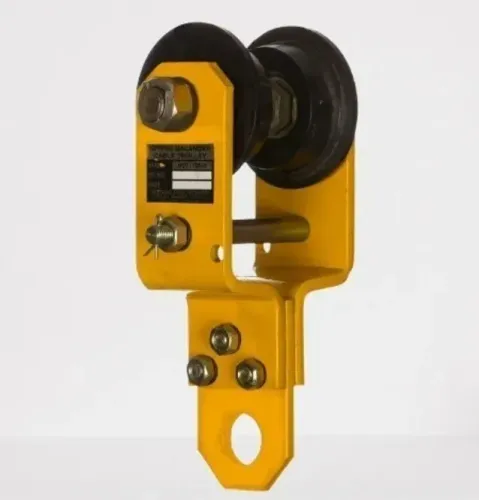
 | C-Track & Trolleys Suitable Trolley for Track (55X55) Capacity 300 Kgs Hendo Industries offers a robust and high-performance trolley suitable for 55x55x3000 mm track with 300 kg load capacity, designed to deliver smooth... View product → |
 | C-Track & Trolleys Suitable Trolley for Track (45X45) Capacity 150 Kgs Hendo Industries offers a high-quality trolley suitable for 32×32 mm track with 150 kg load capacity, designed for smooth and efficient material... View product → |
Frequently asked questions
How do you calculate the complete suspended load for a track trolley?
Add the tool or material, fixture, hook, clamps, balancer, hose, cable carrier, fittings and every part lifted together. Use the heaviest operating combination rather than the average job.
When is a 40 kg, 150 kg or 300 kg track trolley suitable?
Match the trolley to the complete suspended load and the factory task. Use the 40 kg option for lighter tool assemblies, 150 kg for medium loads, and 300 kg for heavier handling tasks after confirming the installation limits.
What should you check on a C-track before selecting a trolley?
Check the actual C-track profile, rail dimensions, hanger spacing, rail spans, hanger loads and whether multiple trolleys share the load. Do not select from the nominal size alone.
What capacity and installation details belong in the quotation?
Specify the rated capacity, complete suspended load, C-track profile, rail spans, hanger loads, trolley quantity, load-sharing arrangement and installation limits.
Related products
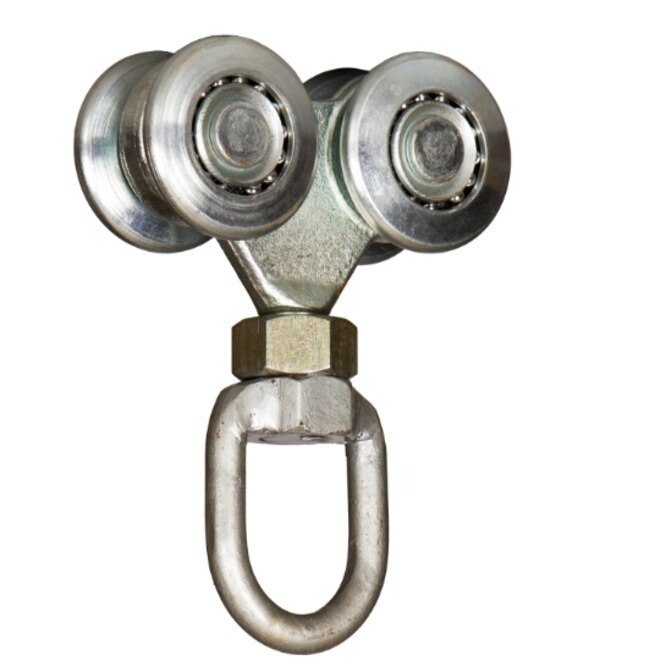
 | C-Track & Trolleys Suitable Trolley for Track (32×32) Capacity 40 Kgs Hendo Industries presents a high-performance trolley suitable for 32×32 mm track systems with 40 kg load capacity, designed for smooth and efficient... View product → |
 | C-Track & Trolleys Hendo Industries offers high-quality 32x32x2900 mm track systems designed for smooth, efficient, and reliable material handling in industrial... View product → |
 | C-Track & Trolleys Hendo Industries offers premium-quality 45x45x3000 mm track systems designed to deliver smooth, efficient, and reliable material handling across... View product → |
 | C-Track & Trolleys Hendo Industries offers premium-quality 55x55x3000 mm track systems designed for smooth, efficient, and reliable material handling in industrial... View product → |