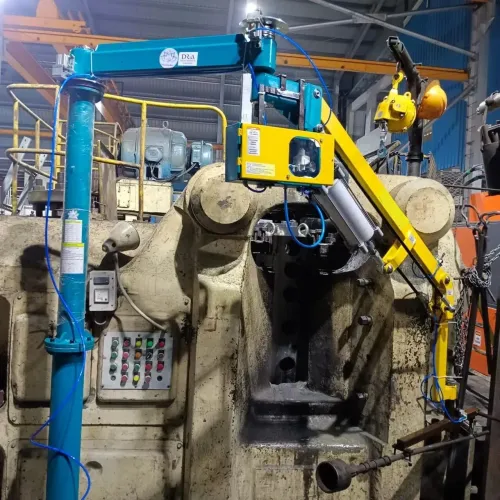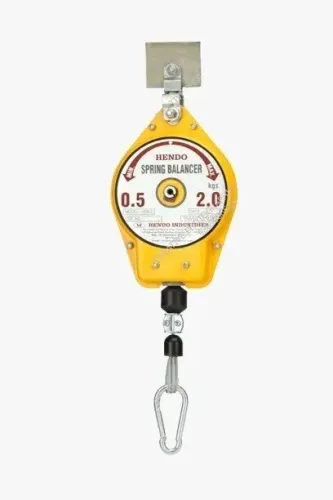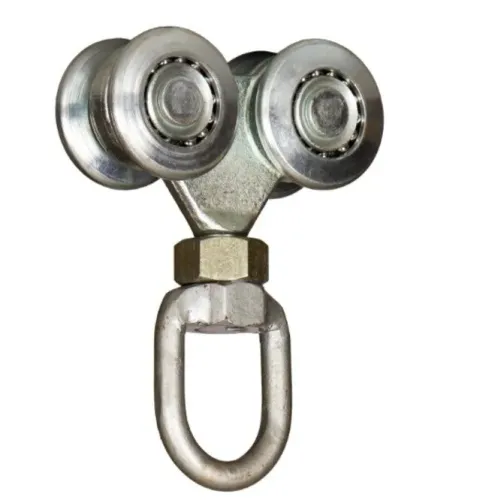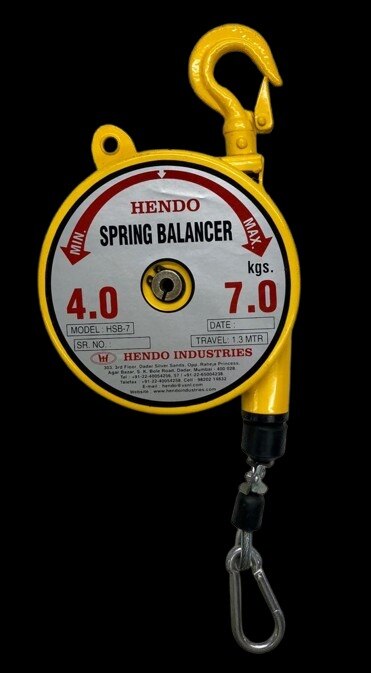
The value of a sheet metal spring balancer depends on more than its purchase price: you need the complete suspended weight, usable cable travel, cycle rate, mounting structure, and maintenance burden. By the end, you can test whether an HLSB unit suits your workstation, compare it with alternatives, and identify the specifications to obtain before ordering.
Key takeaways
- Calculate payback from repeated tool lifts, holds, returns, and shift volume.
- Match the balancer capacity to the complete tool and attachment weight.
- Treat 2.5 metres as cable travel, not automatic coverage of the workstation.
- Compare HLSB-22 and HLSB-30 with tool rails, trolleys, and fixed mounts.
When does an assembly line spring balancer pay for itself?
An assembly line spring balancer pays for itself when the operator repeatedly lifts, holds, and returns the same tool, and that handling time adds up across every shift.
Calculate the annual benefit as minutes saved per cycle × cycles per day × working days × labour cost per minute, then compare it with the complete installed cost.
- Strong case: the tool is used dozens or hundreds of times per shift, and the balancer removes repeated lifting or repositioning.
- Weak case: the tool is used occasionally, or most effort goes into torque reaction, alignment, trigger force, or hose management.
- No case: the operator still needs a torque arm, reaction bar, or positioner, but the balancer is being credited for solving those problems.
Include the balancer, mounting bracket, secondary retention, cable or hose management, inspections, replacement springs or cables, and service downtime in your calculation. A low purchase price can produce a false saving if installation or maintenance is omitted.
Are HLSB sheet metal spring balancers worth it? Measure one workstation for a shift before deciding: count tool lifts, record handling seconds, and note fatigue, dropped-tool events, and awkward reaches.
If the calculated saving exceeds the installed cost within your required payback period, the reduction in handling effort justifies the balancer; otherwise, a fixed stand or existing support may be better.
How do you install, anchor, and size a balancer correctly?
1. Weigh the complete suspended assembly, including the tool, chuck, socket, fittings, hose, cable, and any reaction attachment. Choose an assembly line spring balancer whose spring range covers that weight, not merely its maximum rated load. A mismatched spring can make the tool hard to pull down or snap upward.
2. Measure mounting height, required cable stroke, operator reach, and clearance from the product, fixture, and nearby equipment. Confirm that the tool reaches every fastening point without side-loading the cable. Leave enough travel for the operator’s posture rather than stretching the cable to its stop.
3. Secure a structural mounting point rated for the suspended assembly and the dynamic load created by pulling, releasing, or snagging the tool. Do not treat a sheet-metal panel or light workstation beam as an anchor because the balancer has adequate capacity; verify the beam, bracket, fasteners, and attachment direction as one system.
4. Fit an independent secondary restraint where a dropped tool could injure someone or damage a vehicle, product, or fixture. Attach it to the supporting structure, not to the balancer cable, hook, or spring. Then attach the tool and check retraction and pull-out force at both ends of the stroke.
A balancer supports a tool; it is not a hoist, maintenance support, or lifting device for a person. Check trigger effort and reaction torque separately: screwdrivers, nutrunners, drills, and impact tools may need a torque arm, reaction bar, tool positioner, or controlled fastening system.
Will 2.5 metres provide enough usable tool reach?
A 2.5 meter sheet metal balancer gives you approximately 2.5 metres of cable travel, not a 2.5-metre horizontal radius. The actual work envelope runs from the balancer’s mounting point down to the tool, then shrinks further because the cable must retain reserve turns and avoid bottoming out at full extension.
- Mounting height: Install it high enough to clear the workpiece, but not so high that the operator must raise the shoulders to start a pull. A low anchor can leave plenty of cable unused above the tool’s working zone.
- Operator posture: Measure reach while the operator stands square to the station, with elbows near the body. A tool that reaches only when the worker leans, twists, or reaches around a panel is not ergonomically within reach.
- Cable reserve: Keep the manufacturer’s end-stop margin and enough slack for the hook, swivel, hose, safety tether, and tool connection. Pulling against the final cable turns damages the mechanism and makes the tool feel suddenly heavy.
- Spring force: Include the tool, bit or socket, hose drag, fixture, and tether in the suspended load. Below the minimum load, retraction can fail; near the maximum, the operator must fight the spring.
Test the tool at its highest and lowest working positions. If it retracts sharply, drifts downward, or becomes hard to pull at either end, the 2.5-metre rating does not describe a usable envelope.
How should you compare HLSB-22 and HLSB-30 with other handling methods?
Match the model to the complete suspended tool weight, not the tool’s bare nameplate. The HLSB-22 suits tools and attachments weighing 15–22 kg; the HLSB-30 suits 22–30 kg. Check the spring range at full 2.5-metre extension and retraction, because an incorrect match can make the tool hard to pull down or snap upward.
| Model | Best fit | Layout and workload |
|---|---|---|
| HLSB-22 | 15–22 kg drills, drivers, grinders, or compact fixtures | Fixed overhead point, one operator, repeated cycles with the same tool |
| HLSB-30 | 22–30 kg large drivers, riveters, or heavier fixtures | Strong overhead beam, higher pull loads, repeated repositioning |
| Fixed tool stand | Any tool used at one position | Short reach, low cycle frequency, no overhead structure |
| Overhead rail | Tools serving several stations or a wide work envelope | Long lateral travel and multiple operators |
| Pneumatic balancer | High-cycle tools with variable load or frequent positioning | Air supply is available and low manual force matters |
| Electric manipulator | Bulky, off-centre, or torque-heavy tools | Precise multi-axis movement matters more than simple weight support |
Shape matters as much as mass. A long or off-centre tool can swing, twist, or snag even when it falls inside the rated kilograms. The cable must hang above the tool’s working line, and the anchor must withstand pulling and accidental snags.
Are HLSB sheet metal spring balancers worth it? Usually, when operators repeatedly lift and reposition a suspended tool. Choose a stand for occasional use; choose a manipulator or rail when alignment, reach, or torque reaction—not tool weight—drives the work. A balancer is not a hoist or maintenance support.
What should you verify before buying an HLSB balancer in Pune?
Approve the purchase only after the supplier matches the exact tool weight to the spring’s working range, not merely to the model name. “22” and “30” do not automatically mean kilograms or maximum capacity.
- Request the data sheet for the exact HLSB 22 spring balancer or HLSB 30 spring balancer: minimum and maximum load, cable travel, cable diameter, mounting dimensions, spring adjustment range, and replacement-part numbers.
- For an HLSB 30 spring balancer in Pune, confirm delivery time for the unit, replacement cable and spring, warranty processing, inspection support, and local service coverage.
- Obtain the price for the balancer, mounting bracket, independently attached secondary retention, cable or hose management, installation, and commissioning. Hendo Industries should identify each included item on the quotation rather than leave “standard accessories” undefined.
- Confirm that the balancer supports a tool during operation; it is not a hoist, maintenance support, or personnel-lifting device. Specify an independent secondary restraint wherever a falling tool could injure someone or damage a fixture.
- Test the tool at the top and bottom of the cable stroke. Reject a setup that becomes hard to pull, fails to retract, or pulls upward aggressively at either end.
| Item | Obtain from supplier | Cost or risk if missing |
|---|---|---|
| Capacity | Minimum and maximum tool weight | Poor balance or unsafe pull force |
| Service | Cable, spring, warranty, inspection support | Longer downtime |
| Installation | Bracket and secondary retention | Extra spend and dropped-tool exposure |
Frequently asked questions
When does an assembly line spring balancer pay for itself?
It pays for itself when reduced lifting, holding, repositioning, and tool-return time across repeated cycles exceeds the balancer’s purchase and installation cost.
How do you install, anchor, and size a balancer correctly?
Anchor it to a structure rated for the suspended load, align the cable with the tool path, and select capacity for the complete tool, hose, cable, and attachment assembly.
Will 2.5 metres provide enough usable tool reach?
Only if the operator’s required vertical travel stays within 2.5 metres and the mounting point places the balancer over the full working zone.
How should you compare HLSB-22 and HLSB-30 with other handling methods?
Compare their rated load range, cable travel, mounting needs, adjustment method, duty cycle, maintenance, and total installed cost against rails, trolleys, and fixed supports.
What should you verify before buying an HLSB balancer in Pune?
Confirm the exact model, rated capacity, 2.5-metre travel, warranty, spare-part availability, installation support, inspection requirements, and supplier documentation.