
A stainless steel trolley can look clean while hidden wheel, bearing, weld, fastener, or corrosion defects make a 2-ton load unsafe to move. By the end, you will have a plant-ready inspection routine, cleaning method, condition-based service schedule, and return-to-service test for Pune operating conditions.
Key takeaways
- Inspect ramps, joints, drains, wet areas, swarf, and debris every shift.
- Use clean water and dry thoroughly after removing salts, chemicals, and metal particles.
- Reject trolleys with cracked frames, damaged wheels, loose fasteners, or faulty mechanisms.
- Confirm load rating, centre of gravity, route condition, and braking before moving 2 tons.
Run a daily and weekly trolley inspection route
Check the trolley at the start of each shift, then repeat a documented route weekly. For stainless steel push pull trolley maintenance in Pune, include the plant’s actual ramps, expansion joints, drain covers, wet areas, metal swarf and pallet debris; smooth-floor checks miss impact damage.
- Daily: remove the trolley from traffic, check the deck, frame, welds, handle and guards for cracks, distortion, sharp edges, weld spatter and chemical staining.
- Daily: inspect all four wheels for flat spots, tread wear, cracks, embedded swarf, seized bearings, loose axles and uneven floor contact.
- Daily: push and pull the unloaded trolley in both directions. Record sideways drift, caster vibration, abnormal resistance, sudden release or difficulty crossing a threshold.
- Daily: check nuts, bolts, pins, retaining clips and caster plates for looseness, missing parts or elongation around mounting holes.
- Weekly: clean with neutral detergent or a stainless-compatible cleaner, rinse with clean water and dry the frame. Do not use chloride cleaners, hydrochloric acid or steel wool.
- Weekly: lubricate only the specified bearing, axle or pivot points; wipe away excess lubricant so dust and metal fines do not form an abrasive paste.
- Weekly: test the brakes, locks, handles and any push-pull mechanism through their full travel, with no load attached.
Tag out any trolley with a cracked frame, loose wheel or seized caster. Unload, isolate and positively support it before removing a wheel or axle; never weld, grind or heat an inadequately supported trolley. Record each finding, repair and functional test before release.
Clean stainless steel without creating new corrosion
Start by removing contamination rather than polishing the visible stain. Stainless steel is not corrosion-proof: chloride residue, carbon-steel dust, weld heat tint and stagnant water can create tea staining or local corrosion on 304 stainless.
- Vacuum loose dust and metal fines before wiping; a dirty cloth can drag particles across the frame and scratch it.
- Remove oil and coolant with a neutral detergent or stainless-compatible cleaner, using a soft nylon brush or lint-free cloth.
- Treat weld residue and heat tint with a stainless-compatible process approved for the grade. Do not grind across the frame with a carbon-steel disc or brush.
- Flush chemical contamination promptly with clean water. Identify the chemical before choosing a neutraliser; an incompatible chemical can drive corrosion deeper.
Rinse every cleaned surface with clean water, then dry the frame, joints and crevices. Water left beneath brackets or around casters becomes a stagnant corrosion point.
Do not use chloride-containing cleaners, hydrochloric-acid cleaners, steel wool or abrasive pads. They can scratch the passive layer, embed iron and initiate rust after cleaning.
For stainless steel push pull trolley maintenance in Pune, record the contaminant, cleaner and affected area. If corrosion follows welding or grinding, ask for documented passivation acceptance under ASTM A967/A967M, including the specified free-iron, copper-sulfate or high-humidity test, before returning equipment to food, pharmaceutical or corrosive process areas.
Find wheel, caster, frame, and mechanism faults before failure
A trolley that rolls unevenly, pulls sideways, or becomes difficult to push usually has a wheel, caster, axle, bearing, or alignment fault—not automatically a bent frame. Unload it, isolate it from traffic, and support it positively before removing a wheel or caster.
Never weld, grind, or heat a loaded or poorly supported trolley; sudden load release or changed alignment can follow. This is the starting control for stainless steel push pull trolley repair.
Trace the fault with these checks:
- Inspect every tread for flat spots, cuts, embedded metal, and uneven wear.
- Spin each wheel and check runout, axle wear, bearing play, and seized bearings.
- Check caster swivel-kingpins, mounting plates, cracks, loose fasteners, and wheel-height differences.
- Examine welds, cross-members, and load-bearing frame members for cracks, distortion, or permanent deformation.
- During four wheel trolley service in Pune, test the trolley across expansion joints, ramps, wet patches, drain covers, metal swarf, and pallet debris. These surfaces expose faults that a smooth floor hides.
| Symptom | Likely fault | Confirm before repair |
|---|---|---|
| Uneven rolling | Flat spot, wheel-height difference, or bearing damage | Compare wheel contact and spin resistance |
| Pulls sideways | Caster misalignment, unequal tread wear, or bent frame | Swap no parts; measure caster tracking and frame squareness |
| Hard to push | Seized bearing, loose kingpin, debris, or overloaded wheel | Lift safely and isolate each wheel’s resistance |
| Wobble under load | Loose axle, mounting plate crack, or frame deformation | Check fastener torque, plates, welds, and unloaded rolling |
After structural welding, verify squareness, all-wheel contact, and unloaded rolling before release to production.
Confirm that a 2-ton load is safe to move
Treat 2,000 kg as a starting figure, not a clearance. Confirm the manufacturer’s rating basis, then check the complete operating configuration: payload, trolley mass, removable fixtures, loading impact and the route. If the rating covers payload only, include trolley and fixture mass when checking wheels, floor loading and stopping performance.
Before approving the move, verify:
- Capacity: Keep the calculated gross load below the stated rating and account for shock from dropping or sliding parts onto the deck.
- Distribution: Centre the load over the wheelbase, secure it against shifting and check the manufacturer’s wheel or caster load-rating method. Four wheels do not guarantee one-quarter of the load on each wheel.
- Floor: Walk the route and inspect expansion joints, drain covers, ramps, wet patches, swarf, pallet debris and damaged concrete. These features increase impact and can unload one wheel while overloading another.
- Turning: Check the trolley’s turning radius, caster swivel clearance, visibility and clearance from racks, columns and people. A centred load can still become unstable during a tight turn.
- Ramps: Confirm slope, surface grip, stopping space and whether the trolley can be controlled in both directions. Do not rely on a brake that has not been tested under load.
- Manual force: Measure starting, rolling, stopping and steering force at the handle. Excessive force, sudden release or seized wheels requires a tugger, powered aid or revised route, not simply a larger handle.
Record the load, route, operator, wheel condition and test result in the 2 ton stainless steel trolley maintenance record. Stop the move if any check fails.
Set condition-based service intervals and control trolley recovery
A trolley that fails an inspection does not return to work because it still rolls. Set the interval by impact and contamination: inspect more frequently where floors have expansion joints, ramps, wet areas, drain covers, swarf or pallet debris. For four-wheel trolley service in Pune, calendar-only servicing misses rapid wheel, bearing and fastener damage.
1. Repair when the defect is limited to a replaceable wheel, bearing, axle, fastener or loose hardware. Begin stainless steel push-pull trolley repair unloaded, isolated from traffic and positively supported; never remove a caster from a loaded trolley.
2. Quarantine immediately for weld cracks, bent load-bearing members, severe corrosion, a seized wheel, uneven wheel contact, uncontrolled steering or any trolley that has been overloaded or struck. Attach a red tag, record the trolley identity and rated load, and photograph the defect.
3. Replace the trolley when the frame remains permanently deformed, cracked after assessment, or cannot be restored to its specified geometry without uncertain welding. Do not hammer a structural member straight repeatedly or weld over a crack without finding its cause.
4. Formally recover it only after replacing nonconforming parts and verifying frame squareness, welds, fasteners, wheel contact and unloaded rolling. Specify any cleaning, descaling, pickling or passivation treatment under ASTM A380/A380M instead of writing “polish stainless.”
Industrial trolley recovery in Pune requires a signed inspection record, repair details, photographs, an unloaded movement test and a controlled load test suited to the design. Record the load, floor route and result before release.
Hendo Industries’ model selection still requires matching wheel arrangement and rated capacity to the plant’s actual route, not just the nameplate.
Related products
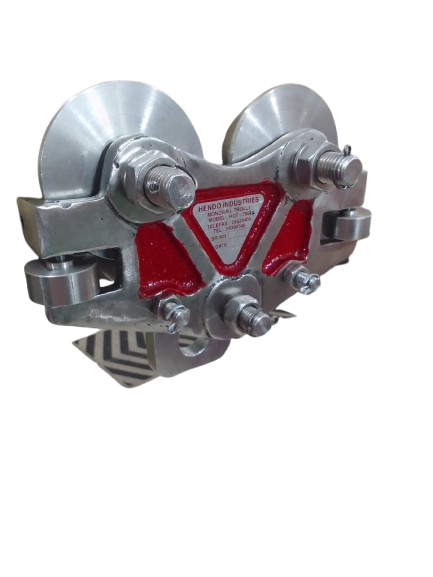 | PUSH-PULL TROLLEYS 2 TON (4 WHEEL)- Stainless Steel PUSH-PULL TROLLEYS The 2 Ton (4 Wheel) Stainless Steel Push-Pull Trolley by Hendo Industries is engineered for smooth and reliable material handling in demanding... View product → |
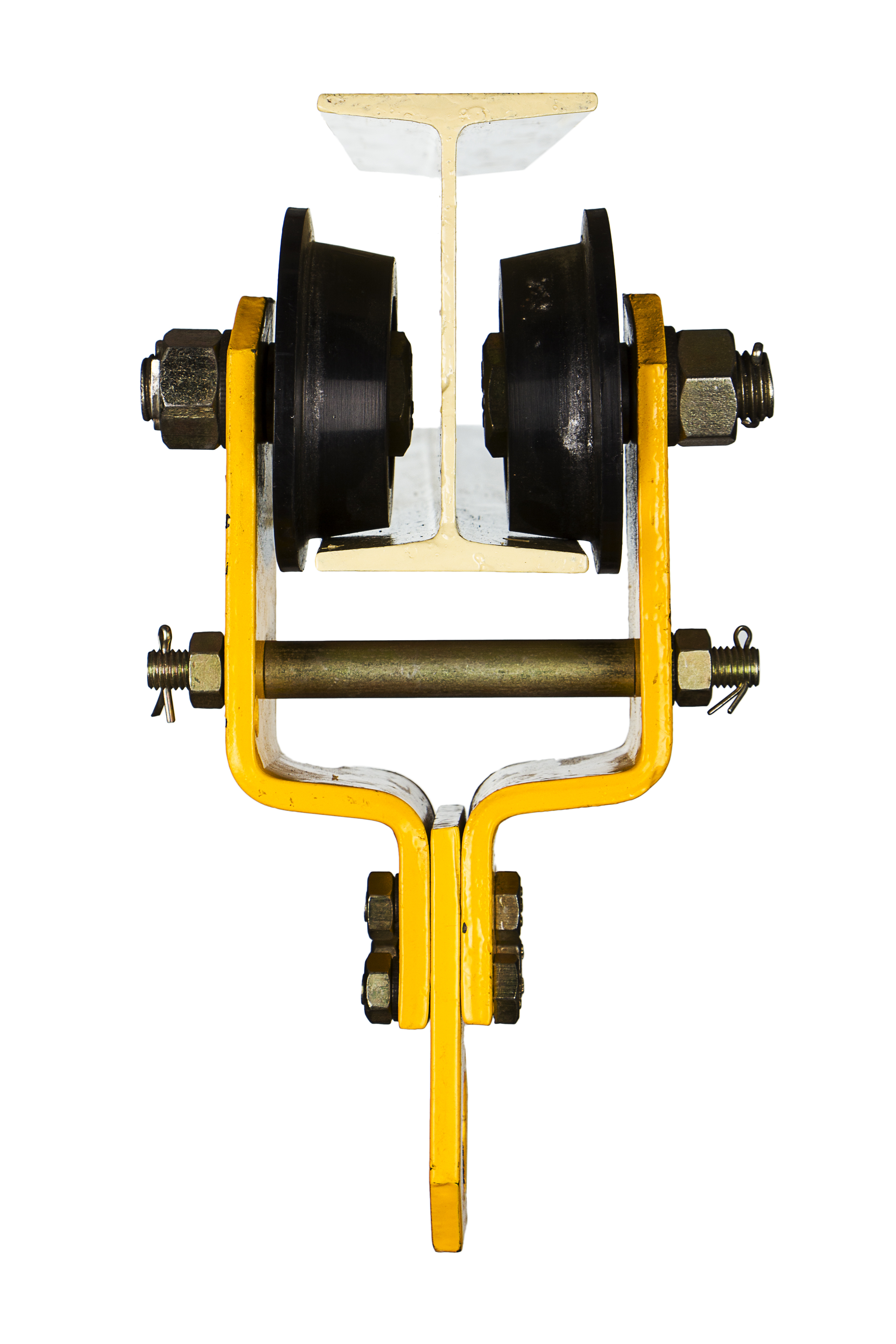 | PUSH-PULL TROLLEYS 1/4 TON (2 WHEEL) PUSH-PULL TROLLEYS The 1/4 Ton (2 Wheel) Push-Pull Trolley by Hendo Industries is a compact and reliable solution for smooth material handling in industrial... View product → |
Frequently asked questions
How often should a stainless steel push-pull trolley be inspected?
Check it at the start of every shift and complete a documented route inspection weekly, including ramps, expansion joints, drain covers, wet areas, swarf, and pallet debris.
How do you clean stainless steel without causing corrosion?
Remove debris, wash with clean water and a compatible detergent, rinse away residues, and dry the trolley. Avoid chloride cleaners, steel wool, and trapped moisture.
What faults require stainless steel push-pull trolley repair?
Repair the trolley before use when you find cracked frames, bent forks or handles, damaged wheels or casters, loose fasteners, seized bearings, or a faulty push-pull mechanism.
How do you confirm a trolley can move a 2-ton load safely?
Check the rated capacity, load centre, frame and wheel condition, floor and route hazards, operator control, and any brakes or steering before moving the load.
When should four-wheel trolley service intervals be changed?
Shorten service intervals when inspections show recurring wheel wear, impact damage, corrosion, contamination, high loads, wet routes, or frequent industrial trolley recovery.
Related products
 | PUSH-PULL TROLLEYS 1/2 TON (4 WHEEL) PUSH-PULL TROLLEYS The 1/2 Ton (4 Wheel) Push-Pull Trolley by Hendo Industries is specially designed to provide smooth and efficient material handling for various... View product → |
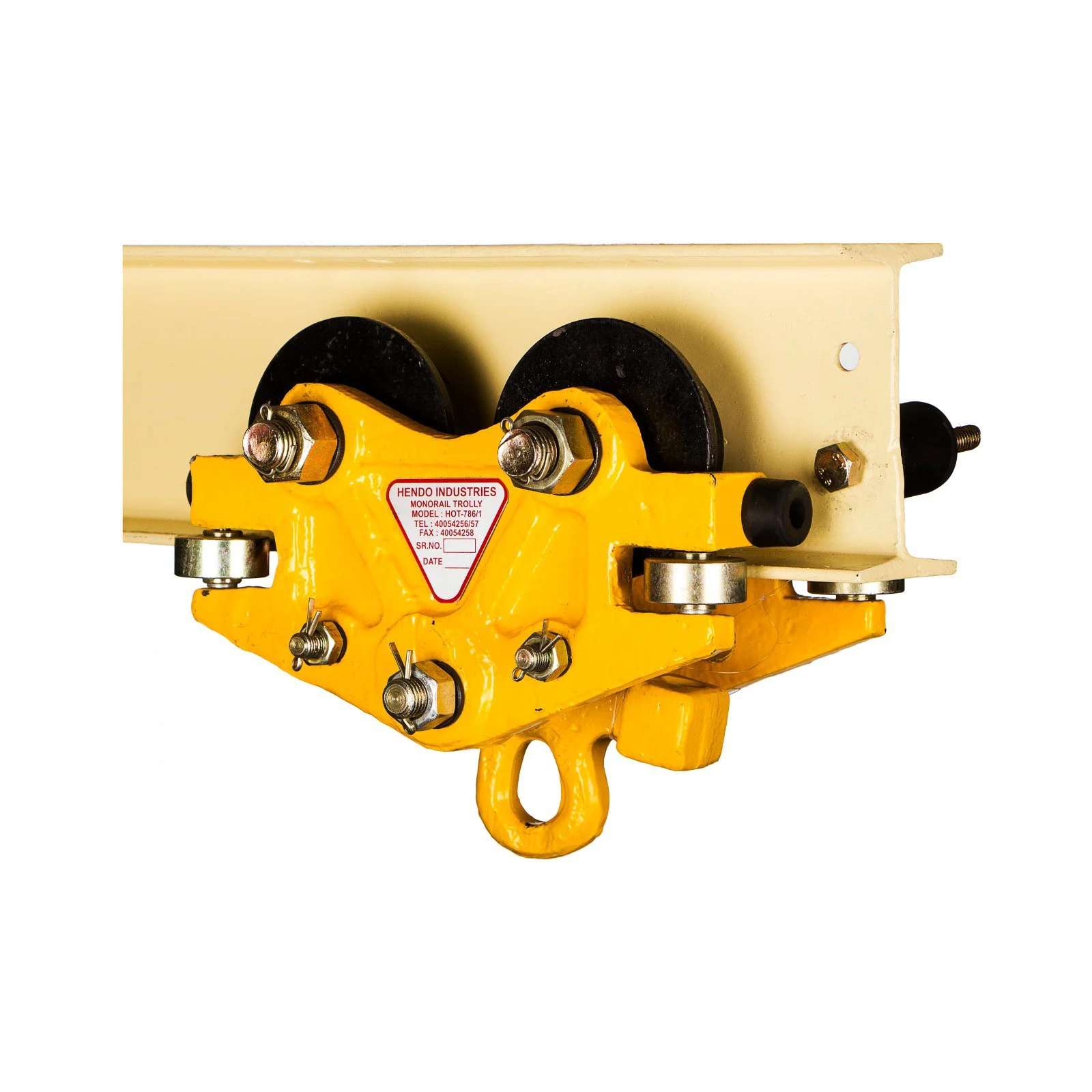 | PUSH-PULL TROLLEYS 1 TON (4 WHEEL) PUSH-PULL TROLLEYS The 1 Ton (4 Wheel) Push-Pull Trolley by Hendo Industries is a durable and efficient material handling solution designed for smooth movement of heavy... View product → |