
Choose from 250 kg, 500 kg, 1,000 kg, and 2,000 kg ratings only after calculating the full moving load and the conditions that affect it. By the end, you will have a practical way to compare capacity, wheel configuration, aisle fit, floor resistance, and operator effort before ordering.
Key takeaways
- Rate the trolley for gross load, including payload, deck, casters, and fixtures.
- Choose 250 kg, 500 kg, 1,000 kg, or 2,000 kg after weighing the heaviest setup.
- Match four wheel trolley size and wheel type to floors, slopes, and turning space.
- Run a loaded site trial before ordering a stainless steel trolley in Gurugram.
Calculate the Gross Load Before You Choose a Rating
Begin with the heaviest payload configuration, not the average one. Weigh the material, packaging, container, pallet, and fixture together, then add the trolley deck, frame, casters, handles, batteries, and permanently mounted equipment. Add a realistic allowance for planned future growth. The total is the gross load that the trolley must carry.
Capacity labels convert as follows:
| Capacity | Equivalent load | Suitable starting point |
|---|---|---|
| 1/4 ton | 250 kg | Light, compact loads moved occasionally |
| 1/2 ton | 500 kg | Heavier bins, tool packages, regular workstation transfers |
| 1 ton | 1,000 kg | Substantial fixtures, component containers, frequent factory movement |
| 2 tons | 2,000 kg | Heavy pallets, coils, machinery parts, or dense loads |
Treat the advertised vertical rating as an upper limit, not an everyday target. Do not plan routine operations at the maximum number; repeated starts, thresholds, dropped loads, ramps, dock plates, and towing need additional capacity or an engineered design.
A 2-ton trolley also counts its own tare weight, so it cannot automatically carry 2,000 kg of material.
Before choosing push pull trolley capacity, confirm whether the rating assumes a centred, evenly distributed, stationary, manually propelled, or towed load. A tall, offset, or overhanging load can need a larger trolley despite weighing less than the rating because it increases tipping and instability risk.
Compare 250 kg, 500 kg, 1,000 kg, and 2,000 kg Options
Choose by gross load and movement pattern, not payload alone. The right push pull trolley capacity starts with the heaviest real configuration and includes the trolley’s own tare.
| Option | Best suited to | Movement pattern |
|---|---|---|
| 1/4 ton, 250 kg | Light, compact loads | Occasional short transfers |
| 1/2 ton, 500 kg | Heavier bins and tool packages | Regular workstation transfers |
| 1 ton, 1,000 kg | Substantial fixtures and component containers | Frequent factory movement |
| 2 tons, 2,000 kg | Heavy pallets, coils, machinery parts, and dense loads | Repeated or demanding movement |
Frequency and impact can move you up a class. Repeated starts, thresholds, dropped loads, ramps, dock plates, and towing justify additional capacity or an engineered design because peak forces exceed smooth-floor pushing.
A 2 ton stainless steel trolley is not automatically suitable for 2,000 kg of material. Its deck, frame, casters, handles, fixtures, and permanent equipment count toward gross load, leaving less payload than the headline rating suggests.
For four casters, divide gross load by three as a preliminary caster-sizing check, not final approval. A 2,000 kg gross load gives about 667 kg per caster before the supplier’s safety margin and test method. Confirm the caster rating under the actual load, floor, speed, impact, and towing conditions.
Match Wheel Count and Trolley Size to the Route
A trolley that fits the load can still fail at the doorway, turn, or workstation. Two wheels suit lighter loads and tighter handling; four wheels provide a broader support base and spread force across the chassis.
| Wheel layout | Strength | Limitation |
|---|---|---|
| Two wheels | Light loads and tight handling | Less support for bulky or unstable loads |
| Two fixed plus two swivel casters | Tracks well in aisles | Needs turning space |
| Four swivel casters | Manoeuvres at low speed | Can caster-trail and scrub under heavy loads |
For a four wheel trolley in Gurugram, measure the loaded route, not just the platform: deck and handle envelope, aisle width, doorway clear opening, turning radius, workstation approach, floor joints, ramps, dock plates, and storage clearance. A higher rating that widens the frame or makes turning harder can block an aisle and complicate traffic control.
Check these points with the trolley carrying its real payload:
- Push through every doorway and narrow aisle.
- Turn at the actual workstation approach.
- Cross joints, ramps, and dock plates at operating speed.
- Record caster tracking, scrubbing, stability, and clearance.
Four swivel casters help at low speed but can trail sideways on uneven flooring. Two fixed and two swivel casters track predictably, yet demand more room to change direction. An empty-frame trial proves little; load distribution and centre of gravity change the result.
Account for Floors, Wheels, Slopes, and Operator Force
A trolley can pass its capacity check yet fail the ergonomic check. A stainless steel material handling trolley becomes impractical when wheels, floor condition, slope, or load geometry demand more force than operators can safely apply.
| Feature | What to check | Failure consequence |
|---|---|---|
| Wheel diameter and tread | Use larger wheels for joints, thresholds, and broken concrete; choose hard or resilient tread to suit the floor and wet-cleaning chemicals | Small or incompatible wheels stall, scrub, or damage the floor |
| Bearings and swivel offset | Inspect for seized bearings and excessive offset between the swivel axis and wheel contact point | Starting force rises and the trolley tracks poorly |
| Route condition | Remove debris and assess floor gaps, uneven concrete, ramps, dock plates, and slope | A vertical rating does not authorise movement across an impact point or gradient |
| Load position | Secure uneven loads and keep the centre of gravity low | A high or offset centre of gravity can tip the trolley |
| Braking control | Specify wheel lock, swivel lock, or parking brake | A caster brake may not hold a loaded trolley on a gradient |
The stated capacity is normally a static vertical rating. Ask for the allowable gradient, obstacle height, speed, impact condition, and whether it covers manual pushing or towing.
Use the HSE screening prompts of 20 kg-force to start and 10 kg-force to keep moving, not universal limits. A wheel lock stops rotation; a swivel lock stops caster turning; a parking brake holds the trolley against rolling. Verify holding on the steepest route.
Use a Gurugram Buyer Checklist and Site Trial
Choose the smallest rating above the gross load only after checking the route and work pattern. For “which stainless steel push pull trolley capacity do i need in gurugram,” include travel distance, movement frequency, floor condition, slope, available operators, aisle geometry, and future load growth.
A stainless steel material handling trolley that passes a weight check can still fail on a ramp or tight turn.
Ask the supplier to provide:
- Capacity conditions, tare weight, caster-load calculation, allowable gradient, obstacle height, operating speed, and impact limits.
- Whether the rating is static, manually propelled, or towable.
- For wet washdown or chloride exposure: stainless grade, weld finishing and passivation requirement, drainage design, caster material, and bearing material. Grade 304 suits many indoor settings; consider grade 316 for chloride exposure.
- A loaded trial using your actual load, wheel material, floor joints, aisle width, turning route, and operator method.
Measure starting force, sustained force, stopping distance, caster tracking, turning, stability, and brake holding. Hendo Industries can be one supplier in the comparison, provided its proposed trolley meets the same site measurements and operating evidence.
| Check | What to record | Why it matters |
|---|---|---|
| Load | Gross mass and future increase | Prevents selecting a rating with no usable margin |
| Route | Slope, joints, thresholds, aisle and turning space | Capacity does not authorise ramp or impact travel |
| Operation | Starts, stops, frequency and operators | Repeated effort can make a rated trolley impractical |
Related products
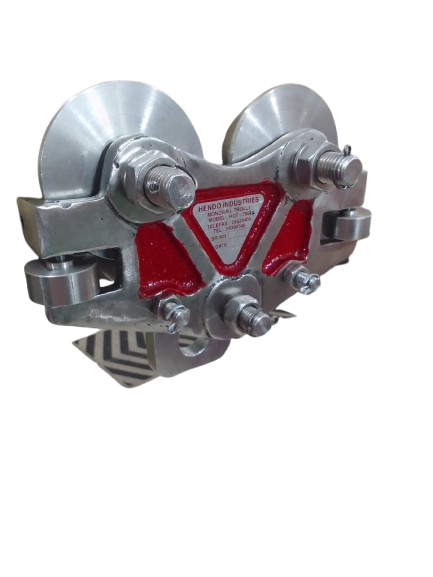 | PUSH-PULL TROLLEYS 2 TON (4 WHEEL)- Stainless Steel PUSH-PULL TROLLEYS The 2 Ton (4 Wheel) Stainless Steel Push-Pull Trolley by Hendo Industries is engineered for smooth and reliable material handling in demanding... View product → |
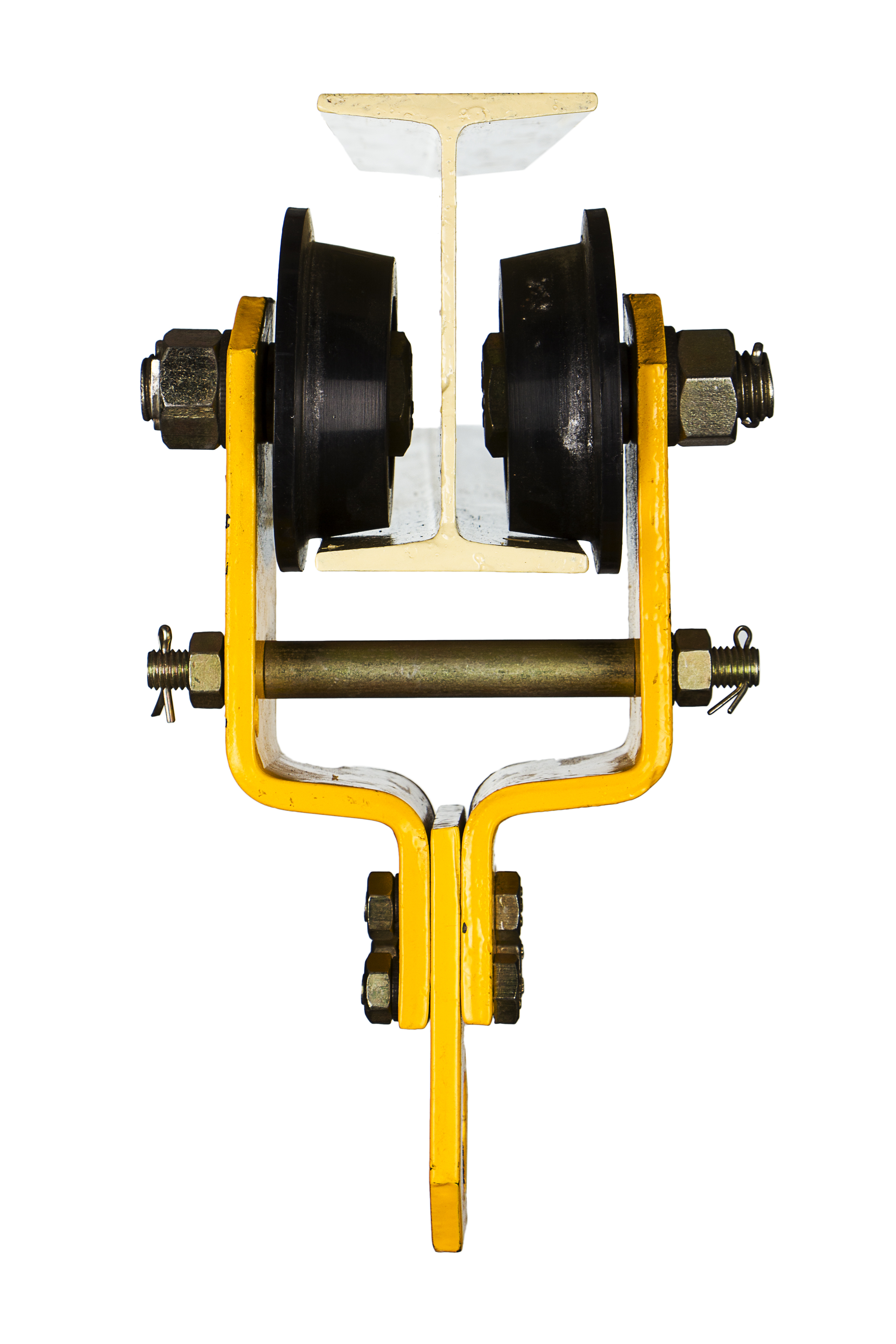 | PUSH-PULL TROLLEYS 1/4 TON (2 WHEEL) PUSH-PULL TROLLEYS The 1/4 Ton (2 Wheel) Push-Pull Trolley by Hendo Industries is a compact and reliable solution for smooth material handling in industrial... View product → |
Frequently asked questions
How do I calculate the gross load for a stainless steel trolley?
Weigh the material, packaging, container, pallet, and fixture together, then add the trolley deck, frame, casters, handles, batteries, mounted equipment, and planned growth allowance.
When should I choose a 2 ton stainless steel trolley?
Choose a 2 ton rating when the calculated gross load, future growth allowance, and route conditions require 2,000 kg capacity. Confirm the loaded trolley fits the route and remains controllable.
How do wheel count and trolley size affect material handling?
Match wheel count, caster size, deck dimensions, and turning radius to floor joints, thresholds, aisles, ramps, slopes, and the load distribution.
What should I check during a trolley site trial in Gurugram?
Test the fully loaded trolley on the actual route, including starts, stops, turns, thresholds, slopes, and parking. Check operator force, stability, clearance, and steering control.
Related products
 | PUSH-PULL TROLLEYS 1/2 TON (4 WHEEL) PUSH-PULL TROLLEYS The 1/2 Ton (4 Wheel) Push-Pull Trolley by Hendo Industries is specially designed to provide smooth and efficient material handling for various... View product → |
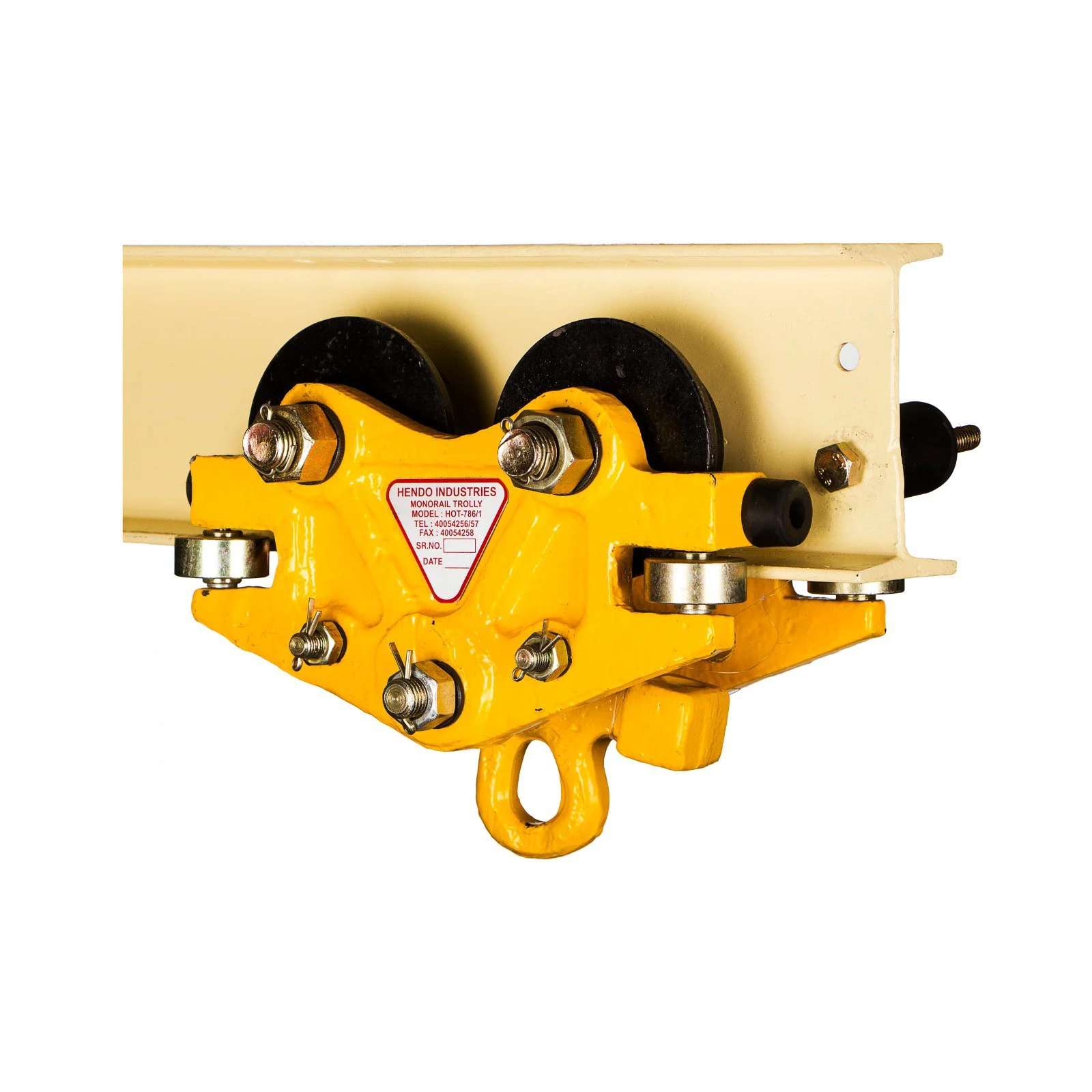 | PUSH-PULL TROLLEYS 1 TON (4 WHEEL) PUSH-PULL TROLLEYS The 1 Ton (4 Wheel) Push-Pull Trolley by Hendo Industries is a durable and efficient material handling solution designed for smooth movement of heavy... View product → |