A suspended tool earns its cost only when it removes enough holding effort, repositioning time, and handling risk from a repeatable task. By measuring the work, sizing the complete suspended assembly, and comparing spring support with other lifting options, you can decide whether the productivity gain justifies the equipment and its upkeep.
Key takeaways
- Measure the complete suspended load, including cables, fittings, and accessories.
- Choose a balancer for the tool’s working range, not its nameplate weight alone.
- Compare spring support with pneumatic and counterbalanced systems before buying.
- Trial the balancer through real cycles before approving it for production.
How a Flat Spring Balancer Changes the Work
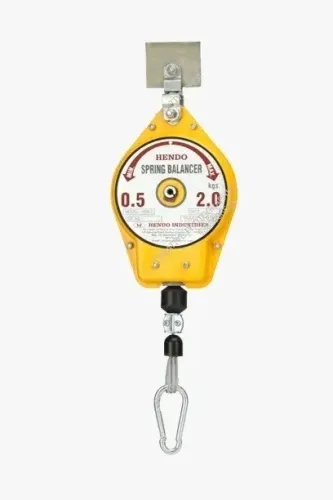
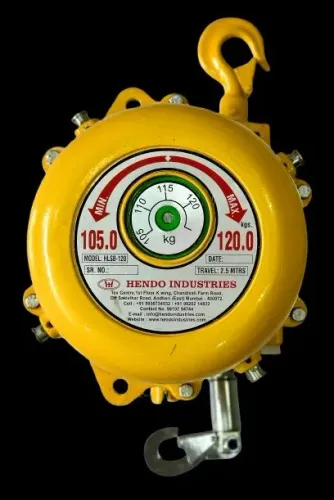
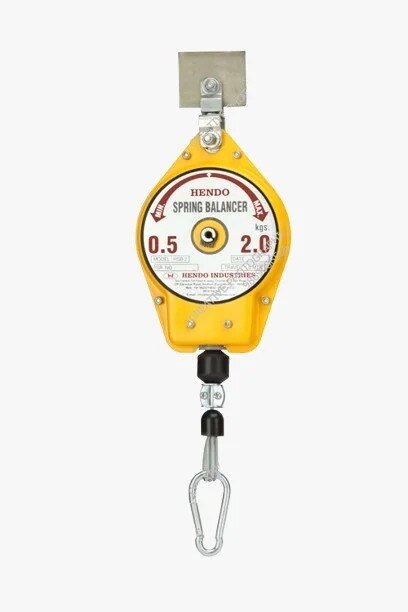
A flat spring balancer uses a retracting spring to support a suspended tool. You pull the tool through a repeatable vertical working zone, then release it and the spring draws it upward. The mechanism carries part of the tool’s weight; your hand still supplies direction and operating force.
It works best when the tool stays near the selected balance setting, not when one unit alternates between substantially lighter and heavier loads.
Common flat series balancer uses include:
- Repetitive fastening
- Drilling
- Grinding
- Riveting
- Soldering
- Welding
- Light assembly
The main flat spring balancer benefits are lower static arm loading and faster tool repositioning. A well-installed unit can also reduce tool drops and hose or cable drag. It does not provide precision positioning or long horizontal travel; a manipulator or trolley fits those jobs better.
It also does not eliminate maintenance: inspect its spring system and load path, then match dust, humidity, heat, or wash-down exposure to the product’s limits. If operators pull far outside the working position, or tool weights vary widely, unwanted upward pull or excessive downward force can erase the ergonomic gain.
Measure the Task Before You Buy
A balancer earns its place when one tool is used repeatedly, stays within its rated load range, and travels through a predictable vertical stroke. The strongest case combines high repetitions per hour with a heavy tool, awkward wrist or shoulder positions, and repeated lifting or repositioning.
Record these figures for one representative shift before installation:
- Tool mass, including bits, hoses, cables, and attachments
- Operator holding force at the work position
- Repetitions per hour and total cycles per shift
- Vertical stroke and horizontal reach from the suspension point
- Tool changes, drops, and minor stoppage minutes
- Spring, cable, inspection, and mounting-point costs
Measure again after installation. A worthwhile purchase reduces holding force, repositioning time, drops, and stoppage minutes enough to repay its purchase and maintenance cost.
| Measure | Supports the case | Weakens the case |
|---|---|---|
| Cycles | The same tool returns to one work zone hundreds of times per shift | The tool is used only occasionally |
| Load | Tool mass stays close to the selected balance setting | Loads vary widely between operators or tasks |
| Movement | The operator pulls through a repeatable vertical stroke | The tool must travel far horizontally or across multiple axes |
| Ergonomics | Shoulder elevation, wrist deviation, or static holding force falls | The tool still demands high reaction torque or precision force |
| Maintenance | Passive support removes compressor energy, air-line leaks, and pneumatic servicing | Spring, cable, drum, hook, or mount inspections are ignored |
These flat spring balancer benefits disappear if the suspension point is overloaded or the tool remains poorly positioned. A shorter payback does not make an unsafe layout acceptable.
Compare Spring Support With Other Options
Choose a flat spring balancer when one tool stays within a narrow load range and travels through a repeatable vertical stroke. A flat series balancer uses passive spring support, so it avoids compressed-air consumption, leakage, and compressor maintenance. That advantage disappears if the tool weight changes sharply or operators pull it far sideways.
| Option | Better choice when | Worse choice when |
|---|---|---|
| Flat spring balancer | One tool needs compact, precise vertical support | Full-stroke cycles, shock loads, corrosion, or near-maximum loading dominate |
| Fixed hanger | The tool stays at one workstation and needs no lift | Operators repeatedly lift, reposition, or reach across the workpiece |
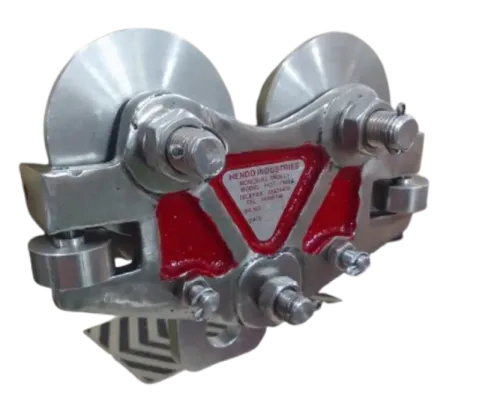
| Overhead trolley | The tool must move horizontally along a rail | You need stable vertical balance without installing a track |
| Pneumatic balancer | Loads vary widely and near-weightless handling matters | Air lines, compressor energy, leakage, and pneumatic servicing are costly |
| Electric hoist | You need controlled lifting, lowering, or occasional heavy handling | Fast, hands-on positioning is required for every cycle |
| Articulated arm | The tool needs guided reach, multi-axis positioning, and reaction-force control | A compact, low-maintenance suspension is enough |
| Long-stroke balancer | The operator needs substantial vertical travel | The working stroke is short and compactness matters |
A flat spring unit still needs inspection of its spring, cable, drum, hook, and mounting point. Ask for cycle-life data, replacement-spring instructions, and local response time; in Gurugram, check dust, humidity, wash-down exposure, temperature limits, corrosion protection, and lubrication requirements before selecting it.
Size the HSB-1 or HSB-2 From the Complete Load
Do not infer capacity from the model number. HSB 1 and HSB 2 are product designations, not universal capacity classes. Weigh the complete suspended assembly: tool, hose, socket, balancer hook, reaction attachment, and any fitting that moves with it.
Select a unit whose published operating range contains that total mass, not merely the tool’s body weight.
| Check | HSB 1 | HSB 2 |
|---|---|---|
| Published load range | Obtain from the exact datasheet | Obtain from the exact datasheet |
| Cable travel | Confirm length and usable stroke | Confirm length and usable stroke |
| Net weight | Confirm for support-structure sizing | Confirm for support-structure sizing |
| Mounting arrangement | Verify eye, hook, bracket, or flange | Verify eye, hook, bracket, or flange |
| Spring adjustment | Confirm field-adjustment method and limits | Confirm field-adjustment method and limits |
| Safety provisions | Confirm cable, spring, and secondary-retention devices | Confirm cable, spring, and secondary-retention devices |
Before specifying an HSB 1 spring balancer or HSB 2 spring balancer, request the manufacturer’s datasheet and written answers to these checks:
- State the minimum and maximum working load, separate from maximum breaking load.
- Confirm whether the rated load includes the complete suspended assembly.
- Ask whether the spring setting can be adjusted at the installation site.
- Request cycle-life information for your repetitions, stroke length, and shock loading.
- Obtain the replacement-spring and cable-inspection procedure.
A compact flat spring wears faster with full-stroke cycling, corrosion, dust, heat, or operation near its upper limit. If the load varies widely, use a tool-specific balancer or another support system rather than forcing one setting to cover both light and heavy tools.
Use a Buying and Trial Checklist in Gurugram
Are flat spring balancers worth buying in Gurugram? Approve one only after a controlled trial proves lower holding force and fewer stoppages without creating an overload or awkward reach.
1. Record the baseline for one shift: tool mass, operator holding force, cycles, vertical stroke, tool changes, drops, and minutes lost to minor stoppages. Repeat the same measurements after installation, then include spring, cable, inspection, and replacement costs in the payback calculation.
2. Request the manufacturer’s datasheet before choosing an HSB 1 spring balancer or HSB 2 spring balancer. Compare rated load range, cable travel, net weight, mounting arrangement, spring-adjustment method, safety-device provisions, cycle-life information, and replacement-spring procedure; the model number is not a capacity standard.
3. Inspect the installation before production use. Confirm the suspension point carries the complete dynamic load, the mounting fasteners are secure, the cable is not kinked or rubbing, the tool stays within its working position, and the balancer has a secondary retention or other specified safety provision.
Check dust, humidity, wash-down exposure, heat limits, corrosion protection, and lubrication instructions.
4. Get written local support from Hendo Industries: installation assistance in Gurugram, spare spring and cable availability, inspection guidance, and a defined response time.
Reject the purchase if the tool pulls upward, requires excessive downward force, travels beyond its useful stroke, or leaves operators reaching outside the safe work zone, even when the payback looks short.
Frequently asked questions
What does a flat spring balancer change during repetitive work?
It supports part of a suspended tool’s weight, reducing the effort needed to lift and return it while you guide and operate the tool.
How should you measure a task before buying a flat spring balancer?
Record the tool, hose or cable, fittings, attachments, working height, vertical travel, cycle rate, and the force needed to operate the tool.
How do spring balancers compare with other support systems?
Spring balancers suit repeatable vertical movement without compressed air, while pneumatic balancers offer adjustable support and require an air supply.
How do you size an HSB-1 or HSB-2 spring balancer?
Match the model to the complete suspended load and required working range, then confirm that the tool remains stable throughout its travel.
What should you check before buying a flat spring balancer in Gurugram?
Request the load range, stroke, mounting details, service information, spare-part availability, and a trial using your actual tool and production cycle.