Automotive assembly tools become harder to control when hoses, cables and suspended equipment drag across the floor or stop short of the work area. By the end, you will know how a C-track trolley moves along a defined route, which load class fits your complete suspended assembly, and which installation details must be confirmed before purchase.
Key takeaways
- Match trolley rating to the complete suspended load, not the tool alone.
- Use C-track routes for repeatable workstation travel with hoses, cables and tools.
- Confirm track supports, bends, stops and clearances before installation.
- Choose 40 kg, 150 kg or 300 kg capacity from measured load data.
How a C-track trolley moves tools along an automotive workstation
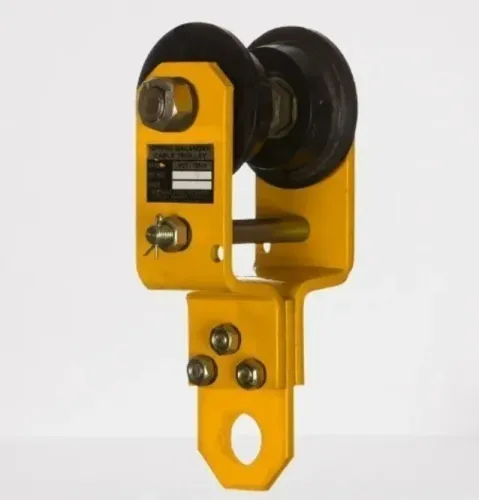
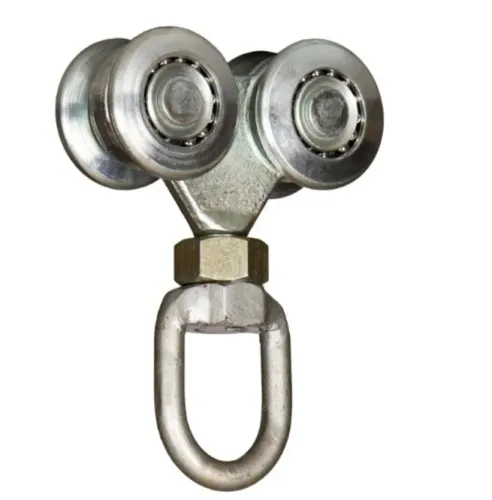
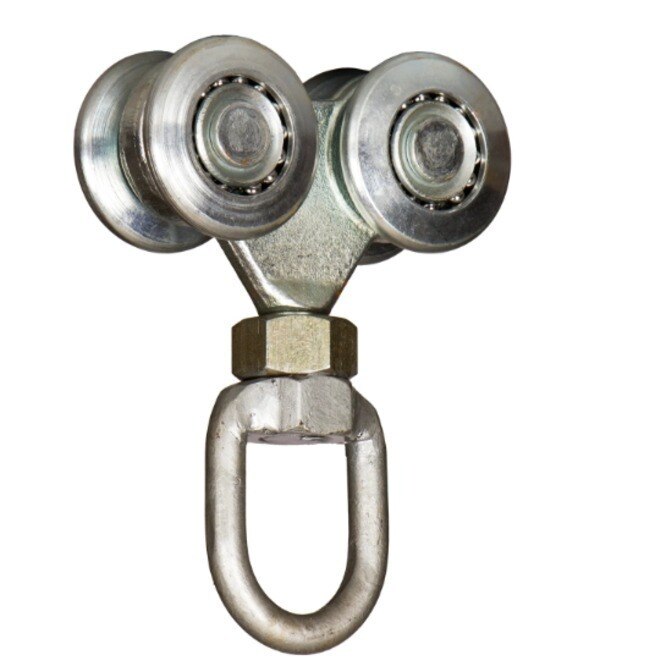
A C-track trolley is a guided carrier that rolls inside a C-shaped enclosed rail. It carries a suspended tool, balancer, hose, cable or component along a defined workstation route, so the operator moves the equipment by hand instead of lifting it between positions.
The rail controls travel, but it does not remove hose drag or loop formation.
C-track trolley uses on an automotive production line include:
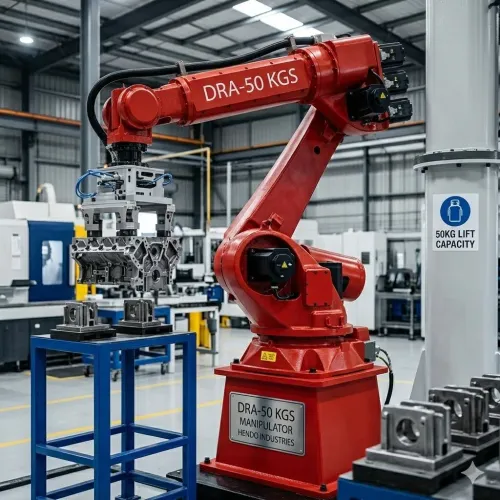
- Moving pneumatic nutrunners and electric screwdrivers along chassis, engine and body assembly stations.
- Guiding welding guns, riveters and sealant applicators between repeatable fastening or joining points.
- Carrying inspection tools, balancers and utility bundles across adjacent work positions.
- Keeping pneumatic hoses, welding leads and electrical cables off the floor and away from vehicle-clearance paths.
The main C-track benefits for an automotive plant in Mumbai are less tool lifting, reduced snagging and more consistent tool positioning. A defined overhead route also preserves aisle space around moving vehicles and gives operators reach across a longer workstation without carrying equipment.
Use the rail, trolley, suspension point, balancer and hose or cable as one rated assembly; a trolley alone does not balance the tool or guarantee safe electrical protection.
The automotive tools and utility packages that suit a C-track route
Typical c track trolley uses include carrying pneumatic nutrunners, electric screwdrivers, riveters, welding guns, sealant applicators and inspection tools along a defined work envelope. The trolley can also support the balancer, swivel, hose reel, cable carrier, brackets and utility fittings that form the complete suspended package.
| Package | Suitable contents | Practical benefit |
|---|---|---|
| Pneumatic assembly | Nutrunner, impact wrench, air hose, regulator and fittings | Keeps the hose off the floor and reduces snagging at the vehicle body |
| Electrical assembly | Screwdriver, welding lead, power cable and control pendant | Preserves aisle space and keeps cable movement predictable |
| Joining and sealing | Riveter, welding gun, sealant applicator and hose bundle | Places the tool within reach without repeated lifting between attachment points |
| Inspection and rework | Torque tester, inspection camera, scanner or small fixture | Makes adjacent work positions easier to reach with consistent tool placement |
The C-track guides movement, but it does not remove hose drag. Check cable weight per metre, hose stiffness, minimum bend radius, loop depth and the pull needed to move the package; a stiff or deep loop can make a light tool tiring to operate.
Count every suspended item before choosing a trolley: tool, balancer, clamps, swivel, fittings, hose or cable and carrier hardware. A 40 kg rating is not 40 kg of usable tool mass. Correct balancer adjustment matters too: too little capacity lets the tool drop, while too much makes the operator pull it down.
How to choose between 40 kg, 150 kg and 300 kg trolley ratings
Choose capacity from the complete moving assembly, not the tool’s nameplate weight. Add the tool, balancer, swivel, brackets, fittings, hose or cable, carrier hardware and any moving attachment; then compare that total with the supplier’s stated working load.
| Option | What the rating covers | When it applies |
|---|---|---|
| 40 kg track trolley | A lighter complete suspended assembly | Pneumatic nutrunners, electric screwdrivers or inspection tools with modest hose and cable packages |
| 150 kg track trolley | A substantially heavier complete assembly | Multi-tool carriers, large utility packages or fixtures travelling between adjacent workstations |
| 300 kg track trolley | A high-capacity complete assembly | Heavy fixtures or combined tool packages after rail, supports and building structure are engineered for the load |
Confirm whether the stated rating applies to one trolley, a trolley pair, a specific rail profile or a particular wheel arrangement. A “150 kg track trolley” label does not automatically mean the whole installed system carries 150 kg.
Check the package that moves with the trolley:
- Cable weight per metre and hose stiffness
- Minimum bend radius and loop depth
- Trolley spacing and the extra pull required along the rail
Set the balancer for the complete suspended mass, working height and stroke. Too little capacity lets the tool drop; too much makes the operator pull it downward. Treat the capacity as a working-load limit, not an impact rating: fit positive end stops or buffers so a loaded trolley cannot strike the rail end.
What the track, supports and trolley rating still need to confirm
A listed capacity becomes a safe working arrangement only after you confirm what the number measures and what carries it. A supplier may rate one trolley, a trolley pair, or a particular rail-and-wheel arrangement. Ask whether the figure includes the tool, balancer, swivel, hose, cable, fittings and every moving attachment.
| Option | Rating basis to verify | Installation question |
|---|---|---|
| 40 kg trolley | Confirm the complete suspended mass, not just the hand tool | Does the rail, bracket spacing and wheel arrangement suit repeated travel? |
| 150 kg track trolley | Check the rail profile, wheel loading and whether the rating applies to one trolley or a pair | Can the overhead structure resist the load without excessive rail deflection? |
| 300 kg track trolley | Confirm static capacity plus off-centre load, stop impact and travel effects | Are the C-rail, splices, end stops, brackets and attachment hardware designed as one system? |
Before approving a quotation, resolve these points:
- Ask Hendo Industries to state the rated load basis and the matching rail profile, support spacing, end stops and attachment hardware.
- Have the installer check the overhead structure, rail deflection, wheel loads and splice strength for the heaviest working position.
- Reject poorly aligned joints, abrupt transitions or an unsuitable bend radius; they increase pull force, wheel wear and cable-loop movement.
- Set the balancer for the complete suspended mass, working height and stroke. Too little capacity lets the tool drop; too much makes the operator pull downward.
- For powered tools, confirm cable bend radius, strain relief, mechanical protection, isolation and earthing or bonding where applicable. IEC 60204-1 does not replace the cable and trolley maker’s installation limits.
Related products
 | C-Track & Trolleys Suitable Trolley for Track (45X45) Capacity 150 Kgs Hendo Industries offers a high-quality trolley suitable for 32×32 mm track with 150 kg load capacity, designed for smooth and efficient material... View product → |
 | C-Track & Trolleys Suitable Trolley for Track (55X55) Capacity 300 Kgs Hendo Industries offers a robust and high-performance trolley suitable for 55x55x3000 mm track with 300 kg load capacity, designed to deliver smooth... View product → |
When a C-track layout is the right choice for a Mumbai plant
A C-track earns its place when operators move the same tool package along a repeatable, mostly linear workstation route. The c track for trolley benefits automotive plant in mumbai becomes worthwhile when it reduces hose drag, tool lifting, floor obstructions and awkward reaches without restricting access to the vehicle.
| Choice | Best fit | Choose another system when |
|---|---|---|
| C-track trolley | Pneumatic nutrunners, electric screwdrivers, welding guns or sealant tools moving along fixed stations | Operators need unrestricted three-dimensional reach or the route changes frequently |
| Articulated arm or spring arm | One tool used at a defined bench position with short, precise movement | Several stations share a long route or the suspended package is bulky |
| Jib crane, lift or material-handling system | Heavy fixtures, engines, batteries or loads lifted between levels or locations | The load is a hand tool and operators need continuous travel along the line |
Match the balancer to the complete suspended mass, working height and stroke. Too little capacity lets the tool drop; too much forces the operator to pull downward.
Do not treat a 300 kg trolley as merely a stronger 40 kg model. Check the rail, brackets, splices, end stops, suspension structure and attachment hardware for static load, off-centre loading and stop impact. Include cable weight per metre, hose stiffness, bend radius, loop depth and added travel pull.
Apply ISO 12100 risk assessment to pinch points, rail openings, dropped-load consequences and maintenance access. If rail deflection, support spacing or overhead-structure strength remains uncertain, select another system or redesign the support.
Frequently asked questions
How does a C-track trolley move tools along an automotive workstation?
Wheels inside an enclosed C-shaped rail guide a suspended tool, balancer, hose, cable or component along a defined route. The operator pulls the equipment between work positions instead of lifting it.
What are common C-track trolley uses in automotive plants?
Common uses include moving assembly tools, electric or pneumatic tool packages, welding equipment, hoses, cables and components between repeatable workstation positions.
How do you choose between a 40 kg, 150 kg and 300 kg track trolley?
Add the tool, balancer, hose or cable package, brackets and any carried component, then choose a trolley rating above that total with suitable operating margin. Do not size the trolley from the tool nameplate alone.
What must you confirm before selecting a C-track system?
Confirm the total suspended load, track span, support spacing, bends, end stops, travel length, mounting structure, clearances and the trolley’s rated capacity.
When is a C-track layout suitable for a Mumbai automotive plant?
It suits a workstation with a repeatable travel path where operators handle suspended tools, hoses, cables or components. Choose another arrangement when the route changes frequently or the structure cannot support the track and load.
Related products
 | C-Track & Trolleys Suitable Trolley for Track (32×32) Capacity 40 Kgs Hendo Industries presents a high-performance trolley suitable for 32×32 mm track systems with 40 kg load capacity, designed for smooth and efficient... View product → |
 | C-Track & Trolleys Hendo Industries offers premium-quality 45x45x3000 mm track systems designed to deliver smooth, efficient, and reliable material handling across... View product → |
 | PUSH-PULL TROLLEYS 1/4 TON (2 WHEEL) PUSH-PULL TROLLEYS The 1/4 Ton (2 Wheel) Push-Pull Trolley by Hendo Industries is a compact and reliable solution for smooth material handling in industrial... View product → |
 | PUSH-PULL TROLLEYS 1 TON (4 WHEEL) PUSH-PULL TROLLEYS The 1 Ton (4 Wheel) Push-Pull Trolley by Hendo Industries is a durable and efficient material handling solution designed for smooth movement of heavy... View product → |