A 500 kg load does not automatically call for a half-ton trolley, and a one-ton rating does not automatically make the safer purchase. You will be able to compare the three common capacities, calculate the real suspended load, check Mumbai site conditions, and write a purchase specification that fits the runway and the work.
Key takeaways
- Include the hoist and lifting accessories when calculating total suspended load.
- Choose 250 kg, 500 kg, or 1,000 kg capacity above the complete assembly weight.
- Confirm runway beam, flange width, floor condition, and clearances before ordering.
- State capacity, travel path, testing documents, and installation requirements on the purchase order.
For 250 kg, 400 kg, or 500 kg, which capacity fits?
Specify the capacity in kilograms: quarter ton = 250 kg, half ton = 500 kg, and one ton = 1,000 kg. A 250 kg load suits a quarter ton push pull trolley only when the complete suspended assembly stays within 250 kg, including the hoist and lifting accessories.
| Load or choice | Suitable capacity | Decision |
|---|---|---|
| 250 kg assembly | 250 kg | Use a quarter ton push pull trolley only when the total suspended assembly remains within 250 kg. |
| 400 kg assembly | 500 kg | A half ton push pull trolley fits when its working-load rating covers the total working load and the runway dimensions suit it. |
| 500 kg payload | 500 kg or 1,000 kg | Investigate the hook, hoist, slings, lifting beam, fixture, and tooling; they can take the total above 500 kg. |
| Below 500 kg with future or demanding duty | 1,000 kg | Choose a one ton push pull trolley for verified margin, increasing future loads, a larger runway design, or duty and load-centre conditions beyond the half-ton model. |
The half ton vs one ton push pull trolley in Mumbai decision is not solved by choosing twice the rating. A one ton push pull trolley can add dead weight, concentrated wheel reactions, headroom, manual travel effort, and price.
Select it below 500 kg only for a documented reason; otherwise, select the half ton model when the total suspended load and runway fit its defined limit.
How to compare rated capacity with the load you actually move
A defensible push pull trolley capacity comparison india starts with the complete suspended assembly, not the payload alone. List the payload, pallet, fixture, bin, hook block, slings, lifting beam, trays, and permanently attached tooling, then ask whether the supplier’s working-load rating covers payload only or total suspended load.
- Payload
- Pallet or fixture
- Bin and trays
- Hook block and slings
- Lifting beam
- Permanently attached tooling
| Check | Static vertical rating | Travel or handling condition |
|---|---|---|
| Load basis | Balanced load hanging vertically | Starting, stopping, joints, ramps, swing, and shock |
| Prohibited assumption | Rating covers only its stated basis | Side pulling, dragging, lifting a stuck load, or pulling around a corner needs separate confirmation |
| Geometry | Centre of gravity remains within the stated limit | Offset loads, tilt, and swing can twist the trolley and increase wheel loading |
A half ton push pull trolley or one ton push pull trolley label is incomplete without the rating basis, practical safety margin, dynamic restrictions, and load-centre limit. Give the supplier the load dimensions, suspension points, centre of gravity, expected tilt, and swing. Ask for written approval for every condition outside a balanced vertical lift.
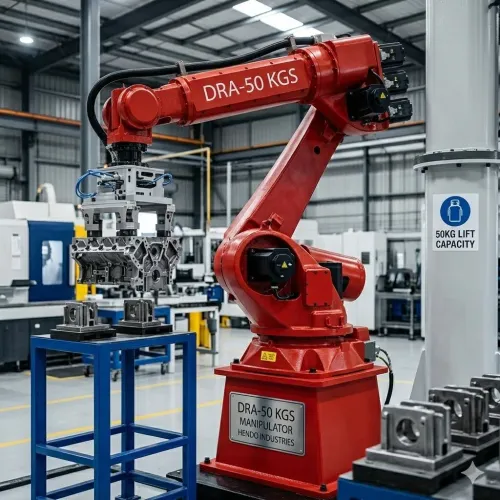
Check the hoist, trolley, runway, beam connections, end stops, and supporting structure as one lifting path. The lowest-rated component sets the usable capacity; a one-ton hoist cannot make a half-ton trolley a one-ton system.
What changes between quarter-ton, half-ton, and one-ton trolley designs?
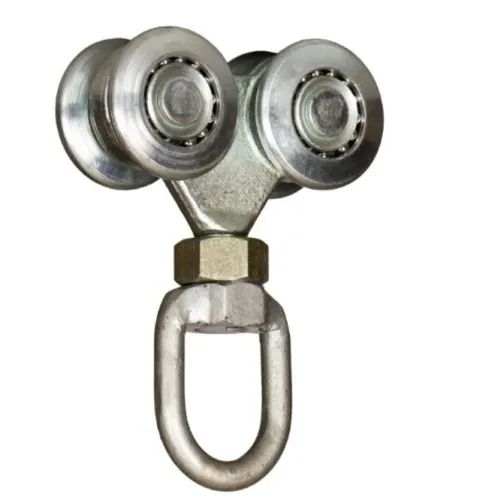
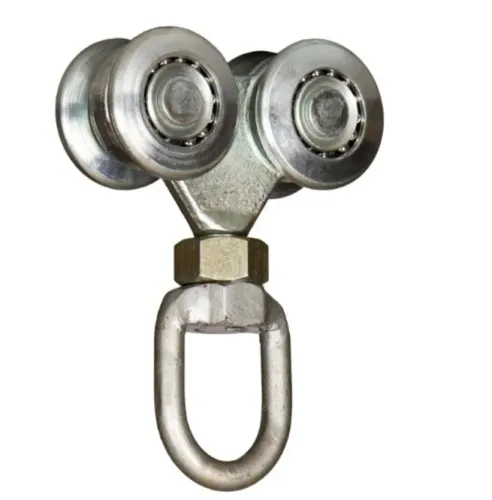
The key change is geometry, not just the rating: a quarter-ton push pull trolley is a compact two-wheel design, while half-ton and one-ton models usually use four wheels.
| Option | Design and movement | Access and load behaviour |
|---|---|---|
| Quarter ton, 250 kg | Lower dead weight, smaller storage footprint, and lower pushing force from wheel and bearing resistance; suits frequent manual repositioning of compact loads | Two-wheel contact improves manoeuvrability, but gives less stability for long or offset loads |
| Half ton, 500 kg | Four-wheel contact spreads reactions across a wider flange or floor area and improves control; the larger frame adds turning effort and dead weight | Better for heavier or longer shapes, but check door width, aisle clearance, headroom, and wheel loading |
| One ton, 1,000 kg | Larger four-wheel frame can create higher concentrated wheel reactions, more manual effort, and greater pushing force | Needs more turning space and headroom; do not select it merely because its rating is twice the half-ton model |
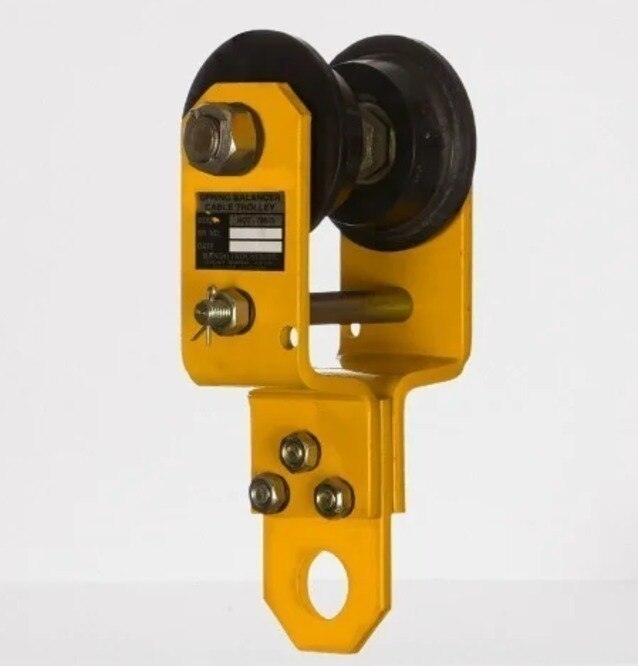
This push pull trolley capacity comparison India buyers need must include beam flange width and thickness, profile, wheel material, adjustment range, headroom, and minimum turning radius or straight-run limitation. Check whether the trolley fits every doorway and aisle.
Specify the trolley dead weight, bearing or wheel resistance, load dimensions, suspension points, centre of gravity, expected tilt, and swing. An offset or long load can twist the frame and unequally load its wheels below the nominal rating.
For a half ton vs one ton push pull trolley in mumbai decision, choose the larger unit only for verified margin, future duty, or conditions exceeding the half-ton design—not capacity alone.
Will the Mumbai factory floor and runway support the selected trolley?
A rated trolley is safe to travel only when the installed runway or floor supports its moving wheel reactions, not merely its hanging load. A beam carrying a static load is not automatically suitable for trolley travel.
For a suspended runway, measure flange width and thickness; do not specify only an ISMB or other nominal beam designation. Inspect beam straightness, flange damage or local flange bending, joints, support spacing, obstructions, end stops, and concentrated moving wheel reactions.
- Record the beam profile, flange measurements, headroom, and the trolley’s wheel adjustment range.
- Check the floor route for concrete quality, cracks, thresholds, expansion joints, drainage grates, slope, uneven surfaces, and oil contamination; each can increase rolling resistance, shock, stopping distance, or instability.
- Confirm door widths, aisle clearance, operator access, turning space, and any straight-run limit. Test whether a one ton push pull trolley can be pushed without excessive force; dead weight, wheel condition, bearings, slope, and load position all matter.
- Define service as indoor, covered, outdoor, washdown, monsoon, coastal, or corrosive. Specify compatible protection or materials for wheels, axles, bearings, threaded adjusters, and brakes; paint alone is not corrosion protection.
- Obtain the runway and floor assessment separately from the trolley rating. A trolley certificate does not approve the installed beam, connections, or route.
This site check belongs in any half ton push pull trolley in Mumbai purchase and any push pull trolley capacity comparison India. Reject a one ton push pull trolley that fits the rating but not the route.
What should Mumbai procurement put on the purchase order?
Put this on the purchase order: rated working load of 500 kg or 1,000 kg, not an unexplained “half ton” or “one ton,” plus the supplier’s definition of total suspended load.
| Option | Purchase decision | Conditions to confirm |
|---|---|---|
| Half ton push pull trolley | 500 kg rated working load | Total suspended load stays within 500 kg; measured runway fits; duty and load centre remain within limits |
| One ton push pull trolley | 1,000 kg rated working load | Verified margin, future duty, larger load centre, or runway requirements justify greater dead weight and wheel reactions |
For a defensible push pull trolley capacity comparison India, require these details in writing:
- Payload, pallet, fixture, bin, hook block, slings, lifting beam, trays, and attached tooling included in total suspended load
- Beam flange width and thickness measured on site, beam profile, adjustment range, headroom, minimum radius or straight run, and load dimensions, suspension points, centre of gravity, tilt, and swing
- Wheel material, wheel and bearing construction, trolley dead weight, manual travel force assumptions, starting and stopping limits, and exclusions for side loads, shock loads, joints, ramps, dragging, and corners
- Indoor, covered, outdoor, washdown, monsoon, coastal, or corrosive conditions; corrosion protection for wheels, axles, bearings, adjusters, and brakes
- Permanently legible capacity marking, operating instructions, inspection and maintenance instructions, spare part identification, and factory or third party load test evidence required by your procedure
Ask Hendo Industries or any competing supplier to confirm the complete trolley and runway interface. A trolley certificate does not certify the installed beam or runway. Choose the half ton vs one ton push pull trolley in Mumbai by measured load and fit, not price per nominal tonne.
Related products
 | PUSH-PULL TROLLEYS 1 TON (4 WHEEL) PUSH-PULL TROLLEYS The 1 Ton (4 Wheel) Push-Pull Trolley by Hendo Industries is a durable and efficient material handling solution designed for smooth movement of heavy... View product → |
 | PUSH-PULL TROLLEYS 1/4 TON (2 WHEEL) PUSH-PULL TROLLEYS The 1/4 Ton (2 Wheel) Push-Pull Trolley by Hendo Industries is a compact and reliable solution for smooth material handling in industrial... View product → |
Frequently asked questions
Which trolley capacity suits a 250 kg, 400 kg, or 500 kg load?
Use a quarter-ton trolley for a complete suspended assembly up to 250 kg, a half-ton trolley for loads up to 500 kg, and a one-ton trolley for loads up to 1,000 kg. Include the hoist, hooks, slings, shackles, and other lifting accessories in the total.
How should Mumbai procurement compare rated capacity with the actual load?
Compare the trolley’s rated capacity with the heaviest complete suspended assembly, not only the component being moved. Leave the manufacturer’s required operating margin and do not exceed the marked safe working load.
What changes between quarter-ton, half-ton, and one-ton push-pull trolley designs?
Higher-capacity trolleys use components sized for greater suspended loads, which affects dimensions, dead weight, wheel loads, runway requirements, and manual push effort. Check the full assembly and runway compatibility rather than comparing capacity alone.
Will a Mumbai factory floor and runway support the selected trolley?
Check the overhead runway beam’s rated load, flange width, beam condition, end stops, travel clearance, floor level, and obstructions. The structure must carry the suspended load plus trolley, hoist, accessories, and applicable dynamic effects.
What should Mumbai procurement put on the purchase order?
Specify rated capacity in kilograms, runway beam and flange dimensions, travel length, operating method, lifting height, wheel or trolley configuration, testing documents, installation scope, inspection requirements, and delivery location.
Related product
 | PUSH-PULL TROLLEYS 1/2 TON (4 WHEEL) PUSH-PULL TROLLEYS The 1/2 Ton (4 Wheel) Push-Pull Trolley by Hendo Industries is specially designed to provide smooth and efficient material handling for various... View product → |