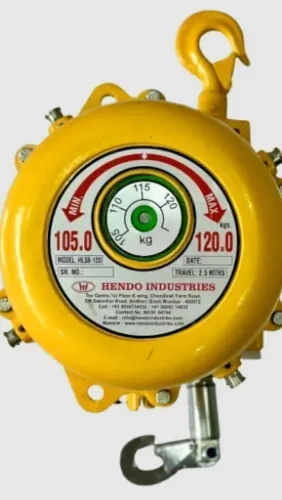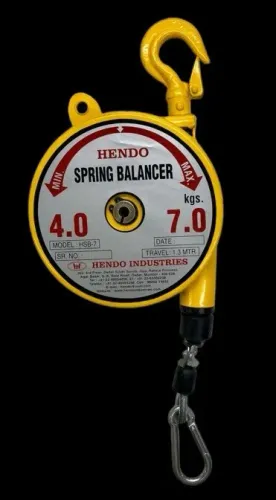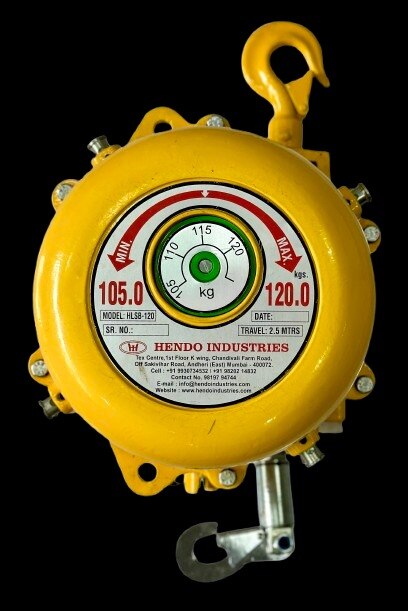
A model number is not proof of a kilogram rating, usable stroke, or safe installation. By checking the complete suspended mass, measured working travel, spring adjustment, support structure, and Mumbai service availability, you can decide whether one of these balancers earns its place on your production line.
Key takeaways
- Verify load, usable stroke and structural support before choosing a model.
- Include the tool, hose, hook and fittings in the suspended load.
- Test spring balance across the complete working stroke.
- Compare local spares, installation and downtime costs in Mumbai.
The verdict depends on verified load, stroke, and support—not the model number
Yes—but only after you verify the load, usable stroke, and support structure for the exact unit. The answer to “are hlsb 70 120 and 130 balancers worth buying in mumbai” is no if the model label replaces a datasheet, local spares plan, or structural check.
| Model | Sensible purchase when | Pause or reject when |
|---|---|---|
| HLSB-70 | The complete tool assembly falls within its confirmed load range and its cable travel reaches the workstation | A heavier attachment, longer reach, or higher travel exceeds the verified figures |
| HLSB-120 | The job genuinely needs more load or travel than the HLSB-70 | A light tool would leave excessive upward spring force that the operator must fight |
| HLSB-130 | The tool must reach multiple fixtures or a deeper work envelope, and the support can carry the larger assembly | Its extra stroke, drum, cable, spring, and housing mass offers no useful reach |
Before approving any model, obtain these figures for that exact part number:
- Rated load range and adjustment method
- Usable cable travel, cable diameter, and wire-rope construction
- Mounting load, body dimensions, and net weight
- Replacement spring, wire rope, swivel, and cable-stop availability in Mumbai
Treat the balancer as position support, not a hoist. Do not lift loads unattended, support a person, or omit secondary tool retention. Check the beam, bracket, trolley, eye bolt, and fasteners for static, pull-down, and shock forces; a strong balancer on a weak frame is still an unsafe purchase.
Build a real long-stroke balancer comparison from the datasheets
The model number does not confirm a kilogram rating. Build your long stroke balancer comparison from the datasheet for the exact HLSB variant, then compare these fields side by side:
| Model | Rated load range | Usable cable stroke | Cable or wire-rope arrangement | Body dimensions and net weight | Adjustment range |
|---|---|---|---|---|---|
| HLSB-70 | Obtain the stated minimum and maximum | Obtain installed rest-to-lowest-working distance | Record diameter, construction, end fitting, and stop | Record length, width, height, and mass | Record spring-tension method and range |
| HLSB-120 | Obtain the complete capacity range; do not assume “120” means 120 kg | Compare directly with HLSB-70 | Record the same cable details | Check added overhead mass and mounting envelope | Confirm adjustment steps and available tension |
| HLSB-130 | Obtain the complete capacity range; do not assume “130” means 130 kg | Compare with HLSB-120, especially for deep work areas | Confirm rope size, drum arrangement, and cable stop | Check whether the support can carry its mounting load | Confirm the full adjustment range |
For an HLSB 70 balancer, calculate suspended mass from the tool, chuck or collet, hose, electrical lead, fittings, and adapter. A bare tool weight can place the assembly below the spring’s minimum range or overload it during pull-down.
Measure usable travel from the installed rest position to the lowest working position. Leave spare travel at both ends; repeated impacts against a cable stop damage the rope, stop, bearing, and spring.
Choose the HLSB-130 over the HLSB-120 only when its verified stroke reaches more fixture positions or a deeper envelope. Choose the HLSB-120 over the HLSB-70 only when load or travel demands it; oversizing leaves upward force that the operator must fight.
Size the balancer for the complete suspended assembly and working travel
Choose by the heaviest complete suspended assembly, not the bare tool weight. Add the tool, chuck or collet, hose, electrical lead, fittings, and adapter; then compare that total with the exact rated load range.
If the total sits near the upper limit, select the next model only after confirming that its minimum load will not create excessive upward force.
| Model | Choose it when | Stroke decision |
|---|---|---|
| HLSB 70 | The complete assembly fits comfortably inside its verified load range | Use it only if its usable travel reaches every required tool position |
| HLSB 120 | The assembly or working envelope exceeds the HLSB 70 balancer’s range | Confirm that extra capacity does not pull a light tool upward |
| HLSB 130 | The datasheet confirms the required load and deeper working envelope | Compare usable stroke with the HLSB 120, not capacity alone |
A useful long stroke balancer comparison measures travel from the installed rest position to the lowest working position. Leave spare travel at both ends. Running against the cable stop or spring limit causes repeated impacts that shorten cable, bearing, spring, and stop life.
- Measure the operator’s vertical reach and the distance between fixture positions.
- Ask for rated load range, usable cable travel, cable construction, mounting load, and adjustment range for the exact model.
- Reject a model if the tool reaches the work only at full extension, or if a released tool accelerates sharply upward.
A longer stroke can add drum, cable, spring, and housing mass above the operator, so check the support structure before choosing the HLSB 130.
Set and test spring balance across the full stroke
Attach the complete suspended assembly before setting tension: tool, chuck or collet, hose, electrical lead, fittings, and adapter. Adjust the spring with the tool at its normal working position until the cable neither pulls the tool upward nor lets it drop.
Do not set an unloaded balancer; excess upward force can make a light tool difficult to position.
Run the acceptance test in order:
- Load the assembly at the minimum expected working mass. Move it from the installed rest point to the lowest working point and back.
- Repeat at the middle of the working-load range. Confirm that the tool returns without a sharp acceleration or overshoot.
- Repeat at the maximum working load. Release the tool at several points and verify that it stays stable rather than climbing or dropping.
- Move through the actual work envelope, including the furthest side reach and the highest and lowest tool positions. Watch the cable for rubbing, kinking, twisting, or contact with the housing.
- Leave spare travel at both ends. Repeated contact with a cable stop or spring limit damages the cable, stop, bearing, and spring.
If tension cannot remain neutral across the real stroke, select a different adjustment range or model. An HLSB 120 balancer is not automatically better than an HLSB 70 balancer, and an HLSB 130 balancer still needs testing at its full usable travel.
Mumbai ownership costs can decide whether the purchase is worthwhile
A low purchase price fails its business case if a broken spring or wire rope stops a Mumbai production cell for weeks. Before asking “are HLSB 70, 120 and 130 balancers worth buying in Mumbai,” price the installed system, not the unit alone.
1. Inspect the proposed mounting point. Get the manufacturer’s mounting-load figure, verify the beam or bracket with your plant engineer, and specify grade, diameter, torque, and locking method for every fastener. Position the suspension directly above the normal work zone, leave spare travel at both ends, and support the hose separately.
2. Test corrosion protection at the actual site. Check the body, cable, swivel, cable stop, and fasteners for coating damage, exposed steel, and water traps. In a humid or coastal area, record the inspection interval and the approved cleaner, lubricant, and replacement coating; do not let salt residue sit on the wire rope.
3. Obtain written Mumbai availability for the exact spring cartridge, wire rope, swivel, cable stop, bearings, and adjustment parts. Ask for prices, lead times, minimum order quantities, and whether each part is replaceable without importing a complete balancer.
4. Confirm who will perform installation, spring adjustment, cable inspection, and emergency repair. Hendo Industries should identify the service contact, inspection record, and response time before approval.
Include these figures in your long stroke balancer comparison: delivered cost, annual inspection labour, spare-part lead time, and downtime cost. Reject any quote that supplies only a model number without a datasheet and service plan.
Related products
 | LONG STROKE SPRING BALANCER HLSB-70 LONG STROKE SPRING BALANCER The HLSB-70 Long Stroke Spring Balancer by Hendo Industries is a high-performance industrial balancing device designed for smooth and efficient... View product → |
 | LONG STROKE SPRING BALANCER HLSB-90 LONG STROKE SPRING BALANCER The HLSB-90 Long Stroke Spring Balancer by Hendo Industries is a durable and efficient industrial balancing solution designed to support heavy tools... View product → |
Frequently asked questions
Are HLSB 70, 120 and 130 balancers worth buying in Mumbai?
They are worth considering when the exact unit matches your verified load and working stroke, the support structure passes inspection, and local spares and service costs fit your budget.
How should you compare an HLSB 70 balancer, HLSB 120 balancer and HLSB 130 balancer?
Use the datasheets to compare rated load, usable stroke, spring balance range, mounting requirements, cable or rope details, dimensions and service parts. Do not choose by model number alone.
How do you size a long-stroke balancer?
Weigh the complete suspended assembly, including the tool, hose, hook, adaptor and fittings. Select a unit whose rated range covers that total load throughout the required working travel.
What should you check before installing a balancer?
Check the beam, trolley or bracket, anchor points, clearance, mounting orientation and secondary safety restraint. Test the spring balance at the start, middle and end of the full stroke.
Related product
 | LONG STROKE SPRING BALANCER HLSB-120 LONG STROKE SPRING BALANCER The HLSB-120 Long Stroke Spring Balancer by Hendo Industries is a heavy-duty industrial balancing solution designed for efficient and safe handling... View product → |