Choose capacity from the complete moving assembly, not the tool’s nameplate weight. By weighing the tool, balancer, hose, cable, fittings, carrier hardware, and the worst operating forces, you can identify the right capacity class and request a track-and-support combination that is safe to install.
Key takeaways
- Include the tool, hoses, cables, fixtures, and pulling forces in the moving load.
- Choose 40, 150, or 300 kg only after calculating the heaviest operating condition.
- Match trolley capacity to the C-track size, hanger spacing, and support structure.
- Send load, travel, rail, environment, and installation details before requesting a quotation.
Start with the complete moving load, not the tool weight
A C-track trolley carries the complete suspended package, not just the tool. Calculate the moving load at its heaviest operating condition, including anything the trolley must lift, guide, or pull along the rail.
Include:
- Tool, power tool, or production device
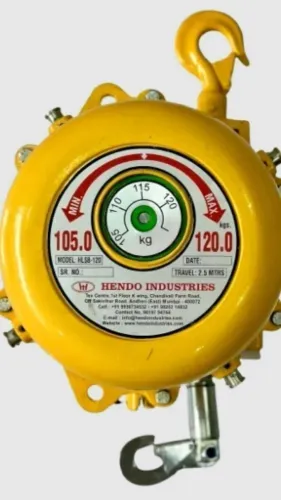
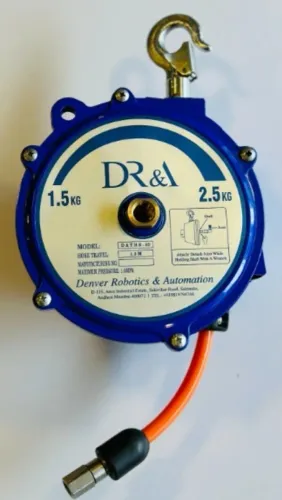
- Tool balancer, spring balancer, or suspension unit
- Hose and cable bundle, including connectors and strain reliefs
- Hooks, swivels, shackles, clamps, and quick couplers
- Fixture, carrier plate, reaction arm, or custom bracket
- Any adapter, pendant, control box, or accessory attached to the trolley
Weigh the assembled package with a calibrated scale rather than adding catalogue weights. Record the highest reading when hoses are connected, cables are hanging in their working position, and the tool is fitted with its largest planned attachment.
Add an allowance for cable drag, unequal loading, movement impact, and future tooling changes before comparing the result with a trolley rating.
Then ask a C-track trolley capacity supplier in New Delhi what the quoted figure means. Confirm whether it is the safe working load, maximum static payload, proof-test load, or combined capacity for multiple trolleys.
Check whether the rating includes suspension hardware or only the trolley assembly; a “150 kg” label is not comparable until those definitions match.
How to choose between 40 kg, 150 kg, and 300 kg
Apply a 25% practical allowance to the heaviest complete moving load, then choose the next capacity above that result. Include the tool, hose, cable, fixture, balancer, fittings, and any accessory that travels with the trolley.
For example, a package measuring 118 kg becomes 147.5 kg after the allowance, so a 150 kg C-track trolley fits the calculation. If a future tool raises the measured load to 130 kg, the adjusted load becomes 162.5 kg and requires the 300 kg class.
| Option | Use after 25% allowance | Check before selection |
|---|---|---|
| 40 kg C-track trolley | Adjusted load up to 40 kg, with clear reserve | Do not use it for a measured load near 40 kg; drag, impact, uneven loading, and tooling changes remove the reserve |
| 150 kg C-track trolley | Adjusted load above 40 kg and up to 150 kg | Confirm the rating applies to your rail profile, spacing, curves, and complete suspended package |
| 300 kg C-track trolley | Adjusted load above 150 kg and up to 300 kg | Confirm the rail, wheels, stops, suspension points, and support structure are designed for higher reactions |
Treat the stated capacity as unusable until the supplier identifies it as safe working load, maximum static load, proof-test load, or aggregate capacity for several trolleys. These figures are not interchangeable, and the rating may exclude the trolley, suspension hardware, balancer, hose, or cable.
Check the rail-support structure separately. Beams, brackets, threaded rods, welds, and building attachments can limit the load below the trolley rating; longer tracks or wider hanger spacing also increase deflection and wheel loads.
Match the trolley to the correct C-track size and support system
Confirm the rail profile and trolley wheel arrangement before comparing capacity labels. A 300 kg C-track trolley may need a larger C-rail section, wider wheel spacing, stronger end stops, and higher-rated suspension points than a 150 kg model.
Ask the supplier to verify these ordering details:
- Rail profile, material, finish, and whether the quoted trolley wheels fit that section.
- Straight track length, curve radius, joint locations, and the planned number and spacing of trolleys.
- Hanger spacing, allowable span, rail deflection limit, and the manufacturer’s load-rating table for that exact arrangement.
- Support beams, brackets, threaded rods, welds, and building attachments, checked for the combined moving load and trolley reactions.
- End-stop rating, installation tolerances, wheel material, and replacement-wheel availability.
| Detail to confirm | Why it changes the selection | Evidence to request |
|---|---|---|
| Rail and trolley geometry | A capacity rating applies only to a stated profile and wheel arrangement | Rail drawing and trolley compatibility statement |
| Hanger spacing and track length | Longer spans or wider spacing increase deflection and wheel loads | Allowable-span table or signed calculation |
| Support structure | The beam, bracket, rod, weld, or anchor can fail before the trolley | Structural load check showing reactions and fixings |
| Stops, curves, and spacing | Curves and sudden stopping add side loads and impact forces | Minimum curve radius and end-stop rating |
Do not extend a rail or widen hanger spacing because the trolley label appears adequate. Send the worst centre-of-gravity position, hose-pull direction, ambient conditions, and complete track layout for recalculation.
What happens when the capacity is too low or unnecessarily high
Choosing too little capacity creates operating trouble: overloaded wheels and bearings increase rolling resistance, cause binding at joints or curves, deform the rail, and shorten service life. A 40 kg C-track trolley becomes unsuitable when the tool, balancer, hose, cable, fittings, hook, and carrier plate together exceed its permitted working load.
| Option | Operating penalty | Installation penalty |
|---|---|---|
| Too low | Difficult movement, wheel or bearing overload, rail deflection, binding, and premature failure | Existing hangers, brackets, threaded rods, welds, and building attachments still need checking; a stronger trolley cannot repair an under-rated structure |
| 150 kg C-track trolley | Suitable only when the complete moving load stays below its working load for the specified rail profile, support spacing, curves, and load distribution | Extending the track or widening hanger spacing can raise rail deflection and wheel loads beyond the quoted rating |
| 300 kg C-track trolley | Extra capacity does not automatically make movement safer or smoother | It may need a larger C-rail, wider wheel spacing, larger end stops, stronger suspension points, and higher-capacity supports |
A higher rating also adds installation cost, weight, clearance requirements, and structural reactions without benefit when the load does not need it. A 300 kg C-track trolley is not interchangeable with a 150 kg model.
Confirm whether each quoted figure means safe working load, maximum static payload, proof-test load, or aggregate capacity for several trolleys before comparing prices.
What to send a New Delhi supplier before requesting a quotation
Send the supplier a drawing and a load schedule, not only “150 kg C-track trolley.” A c track trolley supplier near me in New Delhi still needs to verify the trolley, rail profile, supports and accessories as one working system.
1. State the maximum complete moving load: tool, balancer or spring, hose-and-cable bundle, fittings, hook, fixture, carrier plate and any suspended hardware. Show the load at startup and during the heaviest operation.
2. Identify the rating you require. Ask whether the quoted figure is safe working load, maximum payload, proof-test load or the combined capacity of several trolleys. Request the manufacturer’s load-rating table and the permitted safety margin.
3. Provide the rail profile or drawing, track length, straight and curved sections, minimum curve radius, hanger spacing, support locations, trolley quantity and trolley spacing. Increasing span or rail length can raise deflection and wheel loads.
4. Give tool dimensions, attachment-point height, hose and cable types, bundle outside diameter, bend radius and required travel. Include temperature, dust, moisture, chemicals and any washdown exposure.
5. Ask for wheel material, end-stop rating, installation tolerances and replacement-wheel availability. Request confirmation that the rail, trolley and end stops remain compatible at your stated spacing and load.
A c track trolley capacity supplier in new delhi should return these assumptions on the quotation. Hendo Industries can be included in your comparison, but verify the exact rail-size pairing from its drawing rather than relying on a capacity label.
Related products
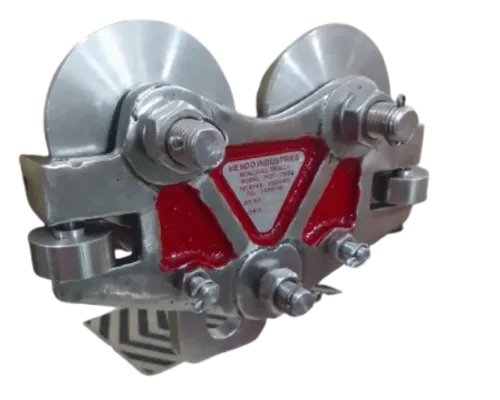
 | C-Track & Trolleys Suitable Trolley for Track (55X55) Capacity 300 Kgs Hendo Industries offers a robust and high-performance trolley suitable for 55x55x3000 mm track with 300 kg load capacity, designed to deliver smooth... View product → |
 | C-Track & Trolleys Suitable Trolley for Track (45X45) Capacity 150 Kgs Hendo Industries offers a high-quality trolley suitable for 32×32 mm track with 150 kg load capacity, designed for smooth and efficient material... View product → |
Frequently asked questions
How do I calculate the load for a C-track trolley?
Add the tool, balancer, hoses, cables, fixtures, clamps, and any other suspended or guided components carried by the trolley at their heaviest operating condition.
When should I choose a 40 kg, 150 kg, or 300 kg C-track trolley?
Choose 40 kg for lighter tool packages, 150 kg for medium-duty suspended equipment, and 300 kg for heavy packages after confirming the full moving load and operating forces.
Does trolley capacity alone determine the correct C-track system?
No. Match the trolley to the C-track size, hanger spacing, end stops, support structure, travel length, and the loads transferred into the building or machine frame.
What should I send a New Delhi C-track trolley supplier for a quotation?
Provide the complete load breakdown, maximum travel, rail length, trolley quantity, C-track dimensions, hanger spacing, duty cycle, operating environment, mounting height, and drawings or photographs.
Related products
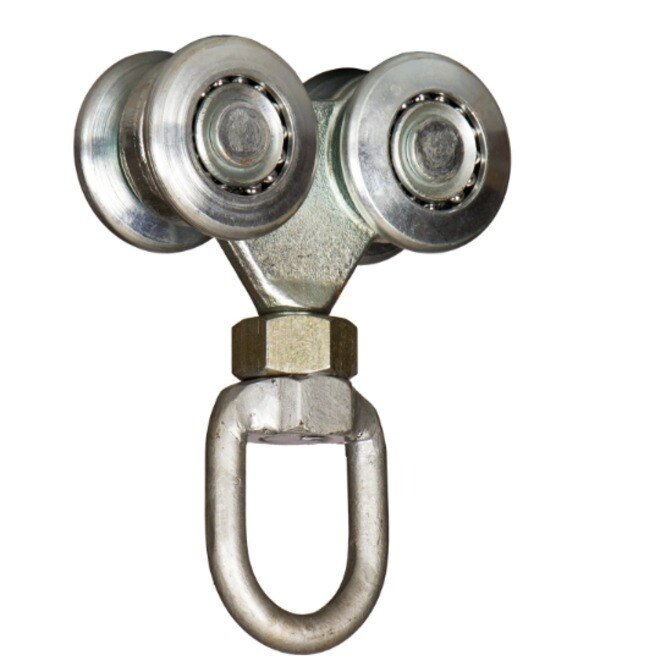
 | C-Track & Trolleys Suitable Trolley for Track (32×32) Capacity 40 Kgs Hendo Industries presents a high-performance trolley suitable for 32×32 mm track systems with 40 kg load capacity, designed for smooth and efficient... View product → |
 | C-Track & Trolleys Hendo Industries offers high-quality 32x32x2900 mm track systems designed for smooth, efficient, and reliable material handling in industrial... View product → |
 | C-Track & Trolleys Hendo Industries offers premium-quality 45x45x3000 mm track systems designed to deliver smooth, efficient, and reliable material handling across... View product → |
 | C-Track & Trolleys Hendo Industries offers premium-quality 55x55x3000 mm track systems designed for smooth, efficient, and reliable material handling in industrial... View product → |